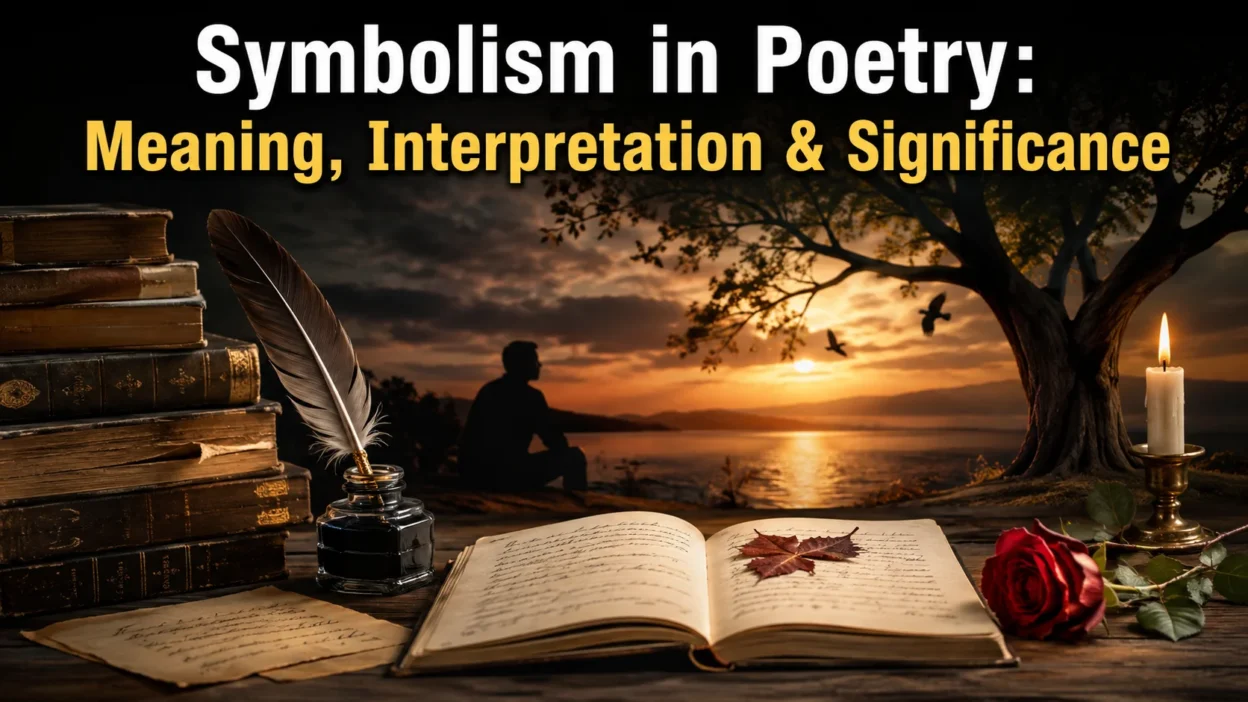
Symbolism in Poetry: Meaning, Interpretation & Literary Significance shows how poets use symbols to express deeper ideas, emotions, and meanings. Poetry has remained a powerful medium for expressing complex emotions, ideas, and experiences through creative language. As a literary device, symbolism allows poets to use objects, colors, actions, and characters that are associated with meanings beyond their literal sense. A simple image like a color red can represent passion, love, devotion, or blood, while a traffic light can show the meaning of stop. These symbols help readers discover deeper meanings within a poem or story and create personal forms of understanding.
In my experience exploring literary works, symbolism has a significant role in shaping modernist literature because many writers use it to convey difficult ideas that direct words cannot fully explain. T.S. Eliot and Roland Barthes are renowned authors often examined through literary criticism because their writings show how symbolism operates as a means of exploring profound themes and elusive themes. Eliot’s seminal work, The Waste Land, masterfully weaves a multitude of symbols through fragmented narratives, barren landscapes, and allusive references, forming an intricate tapestry of meaning and interpretative possibilities. Understanding these layers through critical analysis helps uncover the context and hidden messages within poetic compositions.
The types and examples of symbolism reveal its cultural significance and modern applications in writing and reading experiences. Symbols can express themes of love, death, nature, spirituality, and human emotion, creating layered interpretations and personal connections. However, symbolic meanings may create debate because one symbol can suggest anything or nothing depending on the reader’s symbolic interpretation. A symbol may not always have a fixed, unchanging, or universal meaning, but its special quality allows it to be connected with a particular thing while encouraging readers to think deeply about abstract ideas, complex concepts, and underlying messages.
Quick Answer
What Does Symbolism in Poetry Mean?
Symbolism in Poetry means using objects, images, actions, or ideas to represent deeper meanings beyond their literal definition. In American poetry, symbols often express emotions, social values, personal struggles, and universal human experiences.
TL;DR
• Poetry symbols create deeper meanings beyond literal words.
• American poets use symbols to explore identity and emotions.
• Nature images often represent growth, change, and freedom.
• Symbolism has roots in ancient storytelling traditions.
• Modern poets continue using symbols in new ways.
Read more: Blue Jay Symbolism: Spiritual Meaning, Communication & Insight
What Is Symbolism in Poetry?
Symbolism is a literary technique where poets use something visible to represent something invisible. A symbol may be an object, place, color, sound, or action that carries a deeper meaning.
Unlike a simple comparison, symbolism allows readers to create connections. The meaning may change depending on the poem’s context, historical period, and personal interpretation.
How Symbols Work in Poetry
Poetic symbols often have multiple layers of meaning. A single image can represent different ideas at the same time.
• A rose may represent love, beauty, or loss.
• A storm may symbolize conflict or emotional struggle.
• A road may represent choices or life journeys.
• A mirror may suggest identity or self-reflection.
Symbolism vs Literal Meaning
Poetry frequently combines ordinary images with extraordinary meanings. A poet may describe a tree, but the tree could represent family, strength, memory, or survival.
This layered approach encourages readers to think beyond the surface. It also makes poems more personal because different readers may discover different meanings.
Historical Roots of Symbolism in Poetry
Symbolism in poetry has existed for thousands of years. Ancient cultures used symbolic images in myths, religious writings, and oral storytelling.
Over time, poets developed new ways to use symbols as language evolved. Symbolism became especially important during movements that focused on imagination, emotion, and personal experience.
Ancient and Classical Symbolism
Early civilizations used symbols to explain nature, human behavior, and spiritual ideas. Many ancient stories connected animals, plants, and natural forces with larger meanings.
Greek and Roman writers frequently used symbolic characters and objects. Their ideas influenced later European and American literature.
Symbolism Through Literary Movements
Different literary periods shaped how poets used symbols.
• Romantic poets connected nature with emotion and imagination.
• Victorian poets used symbols for morality and social ideas.
• Modern poets used symbols to explore uncertainty and identity.
• Contemporary poets often create personal and flexible meanings.
Symbolism in American Poetry
American poets have used symbols to explore freedom, identity, nature, history, and social change. These symbols often reflect the country’s diverse experiences and cultural conversations.
Because American poetry includes many voices, symbols can represent both personal feelings and shared national themes.
Common American Poetry Symbols
| Symbol | Meaning in the USA | Common Associations | Notes |
| Eagle | Freedom and strength | Independence, leadership | Often connected with national identity |
| Road | Personal journey | Choice, discovery | Common in American storytelling |
| River | Change and movement | Growth, time | Appears often in nature poetry |
| Light | Hope and understanding | Knowledge, renewal | Used across many traditions |
Famous Symbolic Themes in American Poetry
American poets often explore:
• The dream of personal freedom.
• The relationship between humans and nature.
• Questions of identity and belonging.
• Memories of history and cultural change.
For example, nature symbols frequently appear in American poetry because landscapes represent both physical places and emotional states.
The Role of Nature Symbols in Poetry
Nature is one of the most common sources of poetic symbolism. Mountains, flowers, animals, and weather often represent human emotions or life experiences.
Poets use nature because readers already connect with these images. A changing season can suggest a changing life stage.
Common Nature Symbols
Flowers and Plants
Flowers often represent beauty, growth, and temporary moments. However, their meanings can change depending on the poem.
A blooming flower may suggest hope, while a fading flower may represent aging or loss.
Animals and Birds
Animals often represent human qualities or spiritual ideas.
• Birds may symbolize freedom and imagination.
• Lions may represent courage and power.
• Butterflies may suggest transformation.
• Wolves may represent independence or instinct.
Spiritual and Cross-Cultural Meanings of Poetry Symbols
Symbols in poetry appear across cultures because humans often use images to explain experiences that are difficult to describe directly.
Different traditions may interpret the same symbol in different ways. Context remains important when understanding meaning.
Universal Symbolic Ideas
Many cultures connect certain images with shared human experiences.
• Water often represents renewal or life.
• Light frequently suggests knowledge or hope.
• Circles may represent cycles and completeness.
• Trees can represent growth and connection.
Religious and Spiritual Symbolism
Poetry has often included spiritual symbols connected with faith, morality, and personal reflection.
However, meanings vary widely. A symbol’s importance depends on the poet’s background, beliefs, and intended message.
Emotional and Psychological Meaning of Poetry Symbols
Symbols help poets express feelings that may be difficult to explain directly. They allow readers to experience emotions through images.
A symbol can create a stronger emotional response than a simple statement because it allows imagination to participate.
Why Symbols Feel Powerful
Symbols work because people naturally connect images with memories and emotions.
• A childhood home may represent comfort and belonging.
• A sunset may suggest endings or peaceful transitions.
• A broken object may represent emotional pain.
• A doorway may symbolize new opportunities.
Symbols and Personal Interpretation
Readers often bring their own experiences into poetry. Because of this, the same symbol can create different feelings for different people.
A winter scene may feel lonely to one reader but peaceful to another.
Symbolism in Poetry and Modern Culture
Today, poets continue using symbols in books, online writing, spoken-word performances, and digital communities.
Modern symbolism often blends traditional meanings with new cultural experiences.
Symbols in Contemporary Poetry
Modern poets use symbols to discuss:
• Identity and personal growth.
• Technology and changing relationships.
• Social experiences and community.
• Mental and emotional journeys.
Symbols in Tattoos, Art, and Social Media
Poetic symbols often appear outside traditional writing.
People use symbolic images in tattoos, artwork, and online posts to represent values, memories, or personal stories.
A small symbol can communicate a large idea without many words.
How to Interpret Symbols in Poetry
Understanding symbols requires looking at the whole poem rather than one image alone. A symbol’s meaning depends on surrounding words, tone, and historical context.
Readers should consider what the symbol does within the poem.
Steps for Understanding Symbols
• Identify repeated images or important objects.
• Study how the poet describes the symbol.
• Consider the poem’s emotional mood.
• Connect symbols with major themes.
Avoiding Simple Interpretations
Symbols rarely have only one meaning. A bird does not always mean freedom, and darkness does not always represent something negative.
Poetry depends on context, creativity, and interpretation.
Symbolism in Poetry Across Literary Styles
Different poetry styles use symbols in unique ways. Some poets use clear traditional symbols, while others create unusual personal meanings.
The style often reflects the poet’s purpose and historical period.
Traditional Symbolism
Traditional symbols have meanings recognized by many readers.
Examples include:
• Hearts representing love.
• Stars representing dreams.
• Chains representing restriction.
Personal Symbolism
Many modern poets create symbols based on personal experiences. These symbols may only become clear through careful reading.
This approach allows poetry to feel more individual and experimental.
Misunderstandings and Controversies Around Poetry Symbols
Symbolism can sometimes create confusion because meanings change over time. A symbol that once had one association may gain new interpretations.
Readers should examine the original context before making assumptions.
Changing Symbol Meanings
Cultural changes influence how people understand symbols.
• Older meanings may become less common.
• New generations may reinterpret images.
• Personal experiences may reshape meanings.
Symbol Misuse
Some symbols may be removed from their original artistic or cultural setting and used in unrelated ways.
Understanding history helps separate traditional meanings from later adaptations.
How Symbolism Has Changed Over Time
Symbolism in poetry continues to evolve as societies change. Earlier poets often used shared cultural symbols, while modern writers frequently create personal ones.
Today, symbols can move quickly between literature, music, visual art, and online culture.
Past and Present Symbolic Approaches
Earlier poetry often relied on established meanings. Modern poetry may focus more on individual interpretation.
However, both approaches share the same goal: expressing ideas that ordinary language cannot fully capture.
The Future of Poetry Symbols
As communication changes, poets continue finding new symbols. Technology, cities, and modern experiences provide fresh sources of meaning.
Conclusion
Symbolism in Poetry: Meaning, Interpretation & Literary Significance reveals how poets transform ordinary images, objects, and actions into meaningful expressions of human experience. Through symbols, poetry can explore emotions, ideas, and themes that are often difficult to explain directly. From the color red representing passion or sacrifice to the deeper imagery found in works like The Waste Land, symbolism creates connections between the poet’s vision and the reader’s interpretation.
The beauty of symbolism lies in its ability to create multiple meanings across different cultures, time periods, and personal experiences. It allows readers to look beyond the surface of words and discover hidden messages, emotional depth, and new perspectives. Whether used in modernist literature or contemporary writing, symbolism remains one of poetry’s most powerful tools for creating lasting impact.
FAQs
What is symbolism in poetry?
Symbolism in poetry is a literary technique where objects, colors, actions, or ideas represent deeper meanings beyond their literal interpretation. Poets use symbols to express emotions, themes, and complex concepts indirectly.
Why do poets use symbolism?
Poets use symbolism to add depth, create emotional connections, and allow readers to explore multiple interpretations. It helps communicate ideas that may be difficult to express through direct language.
What are common examples of symbolism in poetry?
Common examples include colors, nature, animals, seasons, and objects. For example, a rose may symbolize love, darkness may represent mystery or sadness, and light may represent hope or knowledge.
How does symbolism affect the reader’s experience?
Symbolism encourages readers to think deeply and analyze hidden meanings within a poem. It creates personal connections because different readers may interpret the same symbol in unique ways based on their experiences.
What role did symbolism play in modernist poetry?
Symbolism played a major role in modernist poetry by helping writers express uncertainty, fragmented experiences, and complex emotions. Authors like T.S. Eliot used symbols to create layered meanings and challenge readers to explore deeper interpretations.