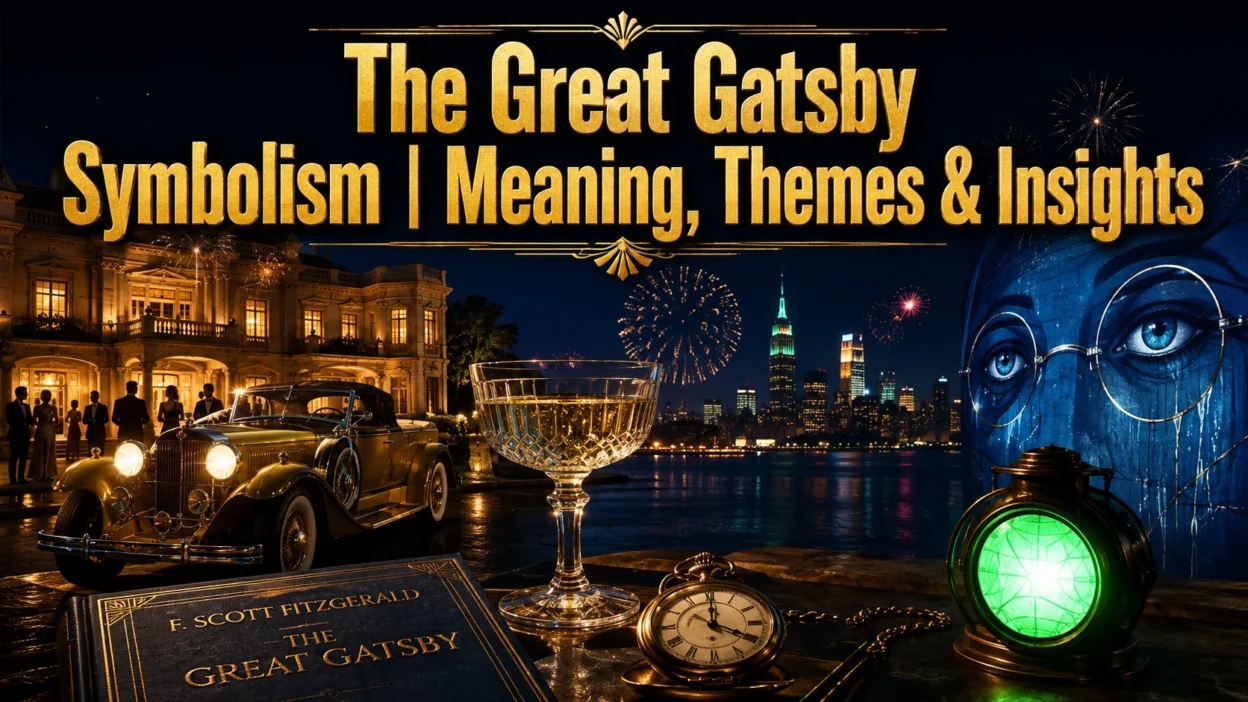
When readers study The Great Gatsby, understanding the context and background information about F. Scott Fitzgerald makes the story’s deeper meaning easier to discover. This classic novel remains a masterpiece of American literature and American fiction because Fitzgerald uses symbolism, literary symbolism, and powerful literary symbols to explore themes of desire, morality, social class, and the American Dream. The green light near Daisy’s East Egg dock represents Gatsby’s hopes, dreams, and future aspirations. From Gatsby’s mansion, it becomes a guiding light in the darkness, showing his quest toward a personal goal connected to Daisy.
The green light acts as a mirror of human ambition, hope, and longing. In Chapter 1, Gatsby reaches toward the light, showing his emotional connection to Daisy and his belief that his future can change. Through this symbolic meaning, Fitzgerald explores illusion, obsession, and the consequences of following an ideal that may not become reality. The symbol reflects the struggle between dreams and truth, revealing the limits of ambition, the pain of lost desires, and the deeper side of human nature. This literary analysis shows how symbols can represent emotions, choices, and personal journeys.
The symbolism in settings and symbolism in objects creates a richer understanding of Gatsby’s world. The valley of ashes, Dr. T. J. Eckleburg, and the eyes of Dr. T. J. Eckleburg represent moral decay, judgment, and social criticism. The contrast between East Egg and West Egg highlights wealth, social life, and identity, while Gatsby’s mansion reflects status, aspiration, and the search for acceptance. In Chapter 9, Nick compares the green light to how America may have appeared to early settlers looking across the ocean toward a new nation. This expands the symbol into a national dream connected with exploration, settlement, history, and nation building. Fitzgerald’s character symbolism, color symbolism, and interpretation of symbols provide timeless insights into dreams, identity, and human goals.
Quick Answer
The Great Gatsby Symbolism primarily represents the American Dream, hope, wealth, illusion, and the gap between dreams and reality. In the United States, these symbols are widely understood as reflections on ambition, social class, and the emotional cost of chasing success.
TL;DR
- • The green light symbolizes hope and unreachable dreams.
- • Colors reveal personality, wealth, and morality.
- • The Valley of Ashes represents inequality and decay.
- • Eyes symbolize judgment and lost values.
- • Gatsby himself represents the promise and failure of the American Dream.
Read more: Shoe Symbolism | Meaning, History & Spiritual Insights
What Is Symbolism in The Great Gatsby?
Why Symbolism Matters
Symbolism is the use of objects, places, people, or colors to express deeper ideas. In The Great Gatsby, nearly every important detail serves two purposes. It moves the story forward while also revealing hidden themes.
For American readers, these symbols help explain the nation’s complicated relationship with wealth, success, and happiness.
Major Symbols at a Glance
• Green light
• Doctor T. J. Eckleburg’s eyes
• Valley of Ashes
• Gatsby’s mansion
• Daisy’s voice
• Colors throughout the novel
• East Egg and West Egg
• Gatsby’s car
Historical Background of the Novel’s Symbolism
The Roaring Twenties
The novel takes place shortly after World War I, when America experienced rapid economic growth. New wealth, jazz music, and changing social values shaped everyday life.
However, beneath this excitement were growing inequalities. Fitzgerald used symbolism to show that material success could not guarantee happiness.
Literary Influences
Many symbols also reflect older traditions.
• Classical myths about impossible dreams
• Christian ideas about temptation and morality
• European symbolism in literature
• Modernist questions about truth and identity
These influences give the novel lasting depth beyond its historical setting.
The Green Light: Hope and the American Dream
Why the Green Light Matters
The green light is perhaps the novel’s most famous symbol. It shines from Daisy’s dock across the water, always visible but never truly reachable.
For Gatsby, it represents Daisy. For many readers, it represents the American Dream itself.
Meanings of the Green Light
• Hope for the future
• Endless ambition
• Unfulfilled desire
• Romantic longing
• Success always out of reach
• Optimism despite failure
The symbol remains popular in American classrooms because it captures the tension between dreaming big and accepting reality.
Color Symbolism in The Great Gatsby
How Fitzgerald Uses Color
Colors appear throughout the novel to reveal emotions and social status. Instead of simply describing scenes, Fitzgerald lets colors communicate hidden meanings.
| Color | Meaning in the USA | Common Associations | Notes |
| Green | Hope and money | American Dream | Most famous symbol |
| Gold | Wealth and luxury | Success | Often linked with old money |
| White | Purity and innocence | Appearance | Can hide corruption |
| Yellow | Wealth and decay | Materialism | Suggests moral decline |
| Gray | Hopelessness | Poverty | Represents emptiness |
Why These Colors Matter
Together, these colors remind readers that appearances often hide uncomfortable truths.
The Eyes of Doctor T. J. Eckleburg
A Symbol of Judgment
The giant billboard overlooking the Valley of Ashes features enormous blue eyes behind glasses. Although originally an advertisement, the image takes on greater meaning.
Some readers interpret the eyes as representing God. Others see them as society watching human behavior without acting.
Common Interpretations
• Moral judgment
• Lost spirituality
• Empty commercial culture
• Observation without intervention
• Human guilt
Because Fitzgerald never explains the symbol directly, readers continue debating its meaning today.
The Valley of Ashes and Social Inequality
America’s Hidden Reality
Between glamorous Long Island and busy New York City lies the Valley of Ashes.
Unlike Gatsby’s luxurious parties, this area reflects industrial waste, poverty, and forgotten communities.
Symbolic Meanings
• Economic inequality
• Broken dreams
• Environmental destruction
• Moral decay
• Social neglect
The contrast highlights the growing gap between America’s wealthy and working classes.
East Egg and West Egg Symbolism
Old Money vs. New Money
The two fictional communities represent different kinds of wealth.
East Egg belongs to families with inherited fortunes.
West Egg belongs to newly wealthy individuals like Gatsby.
Their Deeper Meanings
East Egg
• Tradition
• Social privilege
• Established power
West Egg
• Ambition
• Opportunity
• Self-made success
Together, these settings question whether money alone can buy acceptance.
Gatsby Himself as a Symbol
More Than One Character
Jay Gatsby symbolizes both hope and illusion.
He transforms himself from James Gatz into a wealthy businessman because he believes success will win Daisy’s love.
What Gatsby Represents
• Reinvention
• Persistence
• Romantic idealism
• American ambition
• Self-created identity
His story suggests that determination alone cannot overcome the past.
Emotional and Psychological Symbolism
Dreams and Identity
Many symbols reflect emotional experiences rather than physical objects.
Readers often connect Gatsby’s journey with their own hopes and disappointments.
Emotional Themes
• Hope despite setbacks
• Fear of failure
• Desire for belonging
• Nostalgia for the past
• Loneliness beneath success
These emotional symbols explain why the novel continues to resonate across generations.
Modern Influence of The Great Gatsby Symbolism
Continuing Cultural Impact
The novel’s symbols appear in modern entertainment, education, fashion, and social media.
Today, references to the green light often describe ambitious goals or impossible dreams.
Modern Examples
• Literature classrooms
• Movie adaptations
• Art Deco home décor
• Social media discussions
• Graduation speeches
• Motivational writing
These references show how Fitzgerald’s ideas continue to shape American culture.
Misunderstandings and Changing Interpretations
Common Misconceptions
Some readers believe Gatsby represents pure success. Others think the novel simply celebrates wealth.
Neither interpretation captures Fitzgerald’s full message.
Important Clarifications
• Wealth is not happiness.
• Dreams can inspire and deceive.
• Love cannot erase the past.
• Social status creates lasting barriers.
• Appearances often conceal reality.
Modern scholars also recognize that readers interpret symbols differently based on personal experiences and historical context.
How the Novel’s Symbolism Has Evolved
Then and Now
When the novel first appeared, it received mixed reviews. Over time, educators and literary critics recognized its symbolic richness.
Today, readers often connect its themes with modern issues such as economic inequality, celebrity culture, and personal identity.
Continuing Relevance
• Changing definitions of success
• Consumer culture
• Social mobility
• Wealth inequality
• Personal reinvention
These evolving interpretations help explain why the novel remains widely studied nearly a century after publication.
Conclusion
The Great Gatsby Symbolism | Meaning, Themes & Insights reveals how F. Scott Fitzgerald uses symbols to explore dreams, identity, and the challenges of human desire. From the green light and Gatsby’s mansion to the valley of ashes and the eyes of Dr. T. J. Eckleburg, every symbol carries deeper meaning about ambition, social class, morality, and the American Dream. These elements transform the novel from a simple story of love and wealth into a powerful reflection on human hopes, illusions, and choices.
Through careful literary analysis, readers can see how Fitzgerald connects personal dreams with larger ideas about society and history. The symbols in the novel continue to feel relevant because they represent universal emotions such as longing, aspiration, disappointment, and the search for meaning. The lasting impact of The Great Gatsby symbolism comes from its ability to show how dreams can inspire people while also revealing the risks of chasing impossible ideals.
FAQs
1. What does the green light symbolize in The Great Gatsby?
The green light symbolizes Gatsby’s hopes, dreams, and desire for a future with Daisy. It also represents the broader idea of the American Dream and the pursuit of success.
2. Why is the valley of ashes important in The Great Gatsby?
The valley of ashes symbolizes moral decay, poverty, and the negative effects of unchecked wealth. It represents the hidden struggles behind the glamorous world of the rich.
3. What do the eyes of Dr. T. J. Eckleburg symbolize?
The eyes of Dr. T. J. Eckleburg are often interpreted as symbols of judgment, observation, and the loss of spiritual values in society. They reflect questions about morality and human behavior.
4. How does Gatsby’s mansion represent symbolism?
Gatsby’s mansion symbolizes wealth, ambition, and Gatsby’s desire to gain acceptance. Although it represents success on the outside, it also reveals his loneliness and emotional emptiness.
5. Why is symbolism important in The Great Gatsby?
Symbolism helps Fitzgerald communicate deeper themes about dreams, love, social class, identity, and human nature. The symbols allow readers to understand the hidden messages behind the characters and events.