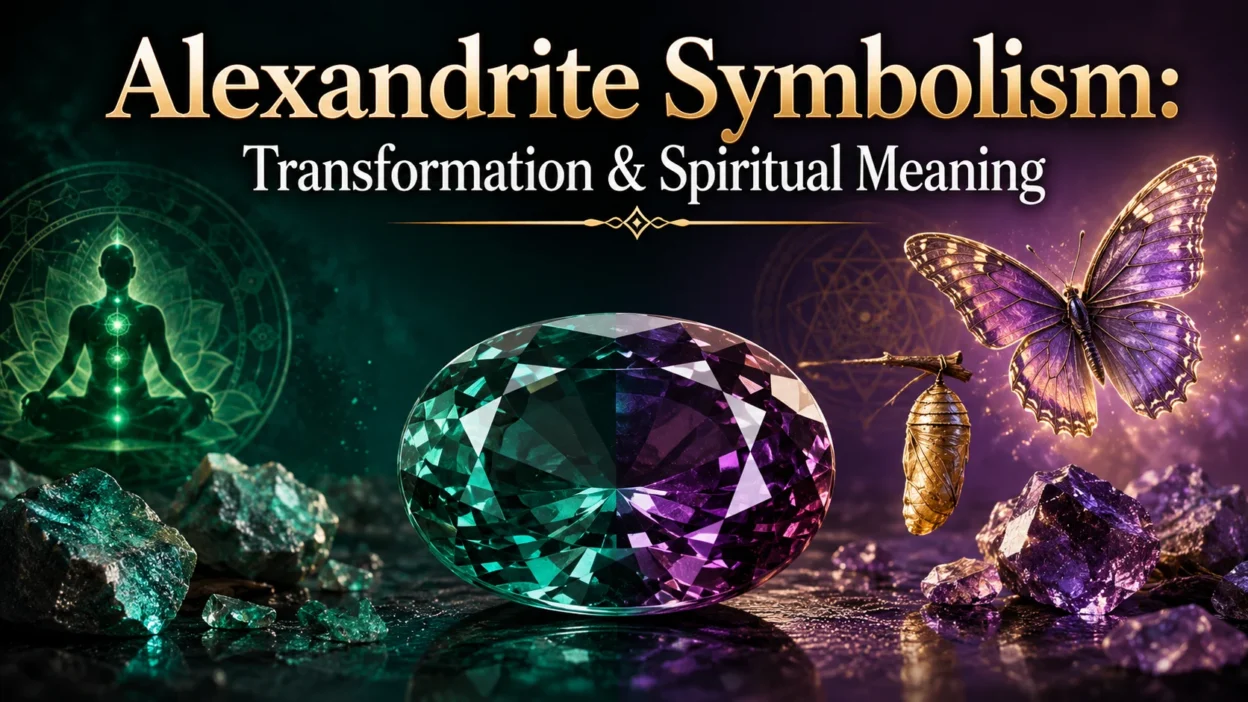
Alexandrite Symbolism: Transformation, Balance & Spiritual Meaning explores a rare gemstone’s colour-changing mystery, balance, and spiritual growth. Alexandrite, a rare, captivating, and fascinating gemstone, is valued for its colour-changing ability and unique quality. This variety of chrysoberyl has remarkable optical properties that create a magical shift in colours under different lighting. In daylight, it shows green and bluish-green shades, while incandescent light or artificial light reveals red, rich reddish tones, and purplish-red hues. This chameleon-like behavior, called the alexandrite effect, makes the stone appear almost alive, reflecting the ever-changing nature of human emotions and life. Its mesmerizing appearance, allure, and value grew after its discovery in the Ural Mountains, Russia, during the 19th century, when it was named after Tsar Alexander II.
Across cultures, spiritual practices, and metaphysical traditions, alexandrite represents a powerful symbol of transformation, balance, and adaptability. Its historical significance connects with change, mystery, and inner awakening, while many believe the stone enhances intuition, encourages self-growth, and attracts abundance. As a spiritual guide, alexandrite supports personal growth, alignment, and harmony between opposing forces. It mirrors the duality we carry within, teaching us to accept both light and shadow, different phases, and every experience. The gemstone encourages us to trust the process, embrace challenges, and understand that loss can become part of evolution rather than an ending.
From studying symbolic gemstones, alexandrite stands apart because its message feels deeply personal yet universally true. Whether worn as jewellery or kept as a talisman, it works as a quiet reminder to pause, breathe, and connect with the self. Like Crystals used in mindfulness practices, alexandrite represents a mindful moment of reflection, intention, and inner harmony. Its dynamic vibrations, mystical appeal, and vibrant beauty make it an exquisite companion for those seeking creativity and inspiration. This naturally powerful gem becomes an ultimate ally for embracing transformation, inspiring creativity, and igniting growth through awareness and mindful intention.
Quick Answer
Alexandrite Symbolism: Transformation, Balance & Spiritual Meaning represents change, harmony, and personal evolution in American gemstone culture. Its colour-changing quality is often viewed as a reminder to embrace life’s transitions while maintaining inner balance.
TL;DR
• Alexandrite symbolizes transformation, adaptability, and renewal.
• Its green and purple colors represent balance and creativity.
• The gemstone gained fame after its discovery in 19th-century Russia.
• Americans often associate alexandrite with individuality and rarity.
• Modern uses include jewelry, gifts, and personal symbolism.
Read more: Symbolism in Julius Caesar | Themes & Historical Meaning
What Is Alexandrite Symbolism?
Alexandrite symbolism comes from the gemstone’s unusual ability to display different colors. In daylight, it often appears green or bluish-green, while incandescent light can reveal red, purple, or raspberry shades.
This dramatic shift creates a natural connection with transformation. For many people, alexandrite represents the ability to adapt while keeping a strong sense of identity.
The Unique Appearance of Alexandrite
Alexandrite belongs to the chrysoberyl gemstone family. Its color change happens because of the way it absorbs and reflects different types of light.
Common symbolic associations include:
• Green shades linked with growth and renewal
• Purple tones connected with imagination and wisdom
• Color changes representing personal transformation
• Rare beauty representing individuality
Core Meanings Associated With Alexandrite
Today, people commonly connect alexandrite with:
• Transformation during important life changes
• Emotional balance between different experiences
• Creativity and self-expression
• Inner strength and adaptability
Historical Background of Alexandrite
Alexandrite does not have thousands of years of recorded symbolism like some gemstones. However, its discovery created a fascinating cultural story that shaped its meaning.
The gemstone was discovered in the 1830s in Russia’s Ural Mountains. It was named in honor of future Russian Emperor Alexander II, making it connected with royalty and national pride.
Discovery and Royal Associations
During the 19th century, rare gemstones were closely connected with wealth, power, and status. Alexandrite quickly became valued because of its unusual color-changing effect.
The gemstone gained symbolic meanings related to:
• Luxury and refinement
• Change and mystery
• Royal elegance
• Personal distinction
Ancient Symbolic Connections
Although alexandrite itself is modern, gemstones have long carried symbolic meanings. Ancient cultures often viewed precious stones as signs of protection, spiritual connection, and personal power.
Alexandrite inherited some of these broader gemstone traditions while developing its own identity.
Alexandrite Meaning in the USA
In the United States, alexandrite is mainly recognized as a symbol of uniqueness and transformation. Its rarity makes it appealing to people who want jewelry with a personal story.
American gemstone culture often connects rare stones with milestones such as anniversaries, achievements, and personal celebrations.
Alexandrite in American Jewelry Culture
Many Americans choose alexandrite because it feels personal rather than ordinary. The changing colors create a sense of discovery each time the stone appears under new lighting.
| Context | Meaning in the USA | Common Associations | Notes |
| Jewelry | Individuality and elegance | Rings, necklaces, heirlooms | Valued for rarity |
| Gifts | Personal growth | Birthdays, milestones | Represents meaningful change |
| Collecting | Appreciation of uniqueness | Rare gemstones | Appeals to enthusiasts |
| Fashion | Creative expression | Modern accessories | Matches different styles |
Symbolism in American Identity
Alexandrite can reflect common American values such as:
• Reinvention after major life changes
• Freedom to express individuality
• Appreciation for rare qualities
• Confidence in personal growth
Because American culture often celebrates new beginnings, alexandrite fits naturally with ideas of transformation.
Spiritual Meaning of Alexandrite
Many people view alexandrite through a spiritual lens, although these meanings are personal beliefs rather than scientific facts. The gemstone’s changing colors have encouraged interpretations about energy, awareness, and inner development.
Transformation and Renewal
Alexandrite is often seen as a reminder that change can create new opportunities. Its shifting colors symbolize moving through different stages of life.
People may associate it with:
• Accepting personal changes
• Discovering hidden talents
• Moving beyond old limitations
• Finding new perspectives
Balance Between Opposites
Because alexandrite displays contrasting colors, it is sometimes connected with balance. Green and purple are often viewed symbolically as representing harmony between different aspects of life.
Emotional and Psychological Associations of Alexandrite
Gemstones often carry emotional meanings because people connect objects with memories and personal experiences. Alexandrite’s unusual appearance encourages reflection on identity and change.
Feelings Connected With Alexandrite
People may associate alexandrite with:
• Curiosity about life’s possibilities
• Confidence during transitions
• Creativity and imagination
• A sense of mystery
Identity and Personal Growth
For some, wearing alexandrite represents becoming a more complete version of themselves. The gemstone’s changing colors can mirror how people grow and adapt over time.
Alexandrite Color Symbolism
Color plays an important role in understanding alexandrite’s meaning. Its famous color change creates a symbolic connection between different emotional states.
Green Alexandrite Meaning
Green is commonly associated with:
• Nature and renewal
• Healing symbolism
• Growth and progress
• Fresh beginnings
Purple Alexandrite Meaning
Purple is often connected with:
• Creativity and imagination
• Wisdom and reflection
• Spiritual curiosity
• Luxury and elegance
The combination of these colors creates a symbol of balance between practical life and personal dreams.
Alexandrite in Different Cultures
Alexandrite has meanings beyond the United States. However, interpretations vary depending on traditions and personal beliefs.
Russian Cultural Connection
Because alexandrite was discovered in Russia, it became connected with Russian history and royal associations. The gemstone represented rarity and national pride.
Broader Global Meanings
Across different communities, alexandrite may symbolize:
• Change and adaptation
• Hidden beauty
• Personal discovery
• Emotional balance
These interpretations are often shaped by modern gemstone traditions rather than ancient religious systems.
Alexandrite in Modern Jewelry and Lifestyle
Today, alexandrite appears in jewelry, collections, and personal gifts. Its changing appearance makes it especially attractive to people seeking meaningful designs.
Tattoos and Personal Art
Although less common than traditional symbols, gemstone tattoos featuring alexandrite may represent:
• Personal transformation
• A unique identity
• Life transitions
• Inner strength
Home Decor and Collecting
Collectors and gemstone lovers may display alexandrite because it represents beauty that changes with perspective.
Modern uses include:
• Decorative gemstone displays
• Personalized jewelry pieces
• Meaningful anniversary gifts
• Artistic inspiration
Alexandrite and Birthstone Traditions
Alexandrite is not traditionally one of the official modern birthstones for every month. However, it is often associated with June because some gemstone traditions recognize it as an alternative June birthstone.
June Birthstone Connections
People who choose alexandrite for June often appreciate its symbolism of:
• New beginnings
• Personal transformation
• Emotional balance
• Rare individuality
Its color-changing nature makes it especially meaningful for those who see life as a journey of growth.
Misunderstandings About Alexandrite Symbolism
Because alexandrite is rare and mysterious, many symbolic claims surround it. Some ideas are based on personal beliefs rather than historical evidence.
Symbolism Versus Fact
Alexandrite’s physical color change is scientifically understood. However, meanings like emotional healing or spiritual energy come from cultural and personal interpretations.
Common Misunderstandings
Some people may believe:
• Alexandrite guarantees life changes
• The stone has universal spiritual powers
• Every color meaning applies to all cultures
Instead, symbolism depends on personal beliefs, traditions, and experiences.
How Alexandrite Symbolism Has Changed Over Time
Alexandrite’s meaning has evolved since its discovery. Initially connected with Russian royalty, it later became associated with rarity and personal transformation.
Today, many people view it less as a symbol of status and more as a reminder of adaptability.
From Royal Gem to Personal Symbol
The gemstone’s journey reflects changing attitudes toward luxury. Modern appreciation focuses more on individuality than social position.
Modern Interpretations
Today, alexandrite often represents:
• Embracing change
• Celebrating uniqueness
• Finding balance
• Appreciating life’s surprises
Conclusion
Alexandrite remains one of the most meaningful gemstones because it represents the beauty of change, balance, and personal evolution. Its rare color-changing nature reflects the different phases of life, reminding us that transformation is a natural part of growth. Through its connection with intuition, harmony, and inner awakening, alexandrite continues to inspire people seeking deeper self-awareness and spiritual connection.
Whether admired as a precious gemstone, worn as jewelry, or valued as a symbolic talisman, alexandrite carries a timeless message: embracing change can reveal hidden strengths and new possibilities. Its shifting colors represent the balance between light and shadow, encouraging us to accept every experience as part of our journey.
FAQs
What does alexandrite symbolize?
Alexandrite symbolizes transformation, balance, adaptability, and personal growth. Its ability to change colors represents life’s constant shifts and the importance of accepting change with confidence.
Why is alexandrite associated with transformation?
Alexandrite is linked with transformation because of its unique color-changing ability. The gemstone appears different under various lighting conditions, symbolizing new perspectives, growth, and evolution.
What spiritual meaning does alexandrite have?
Spiritually, alexandrite is believed to represent intuition, inner harmony, awareness, and emotional balance. Many people view it as a stone that encourages self-discovery and positive change.
Is alexandrite a lucky gemstone?
Many traditions associate alexandrite with luck, prosperity, and abundance. Its rare nature and connection with positive transformation make it a meaningful gemstone for those seeking new opportunities.
How can alexandrite be used in daily life?
Alexandrite can be worn as jewelry, kept as a personal talisman, or used during mindfulness practices. Many people appreciate it as a reminder to stay adaptable, embrace growth, and maintain balance in life.