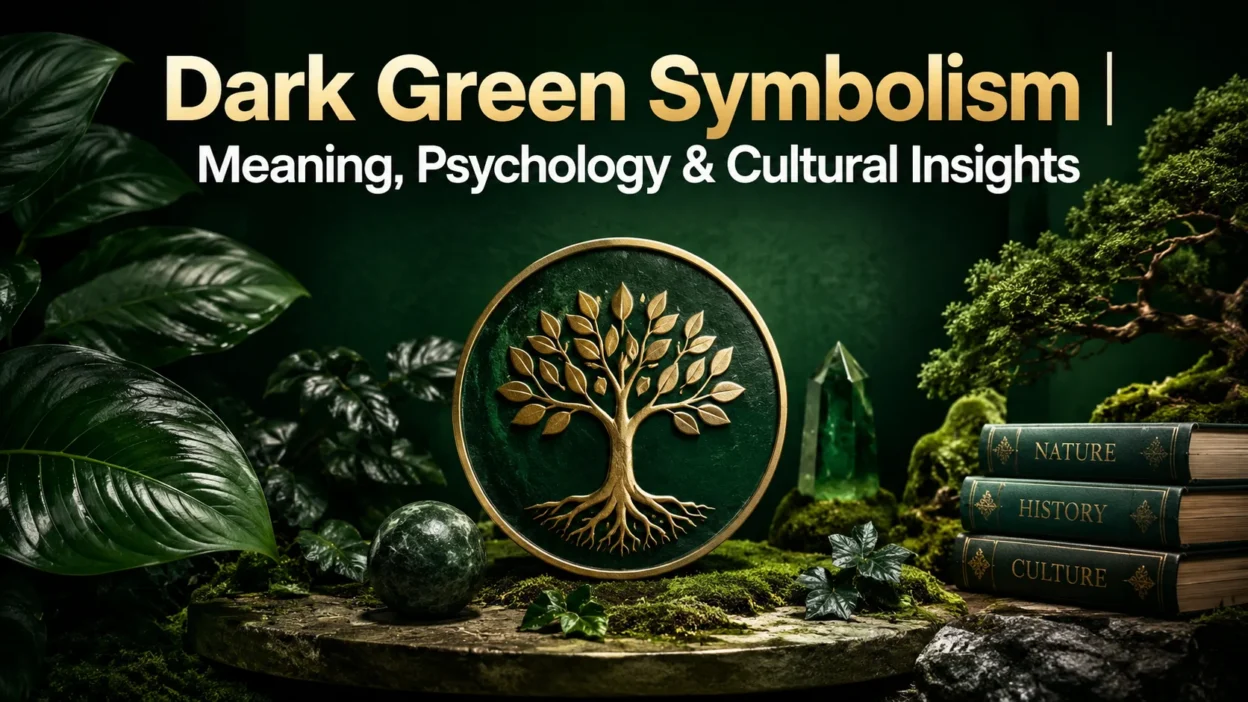
Dark green is a color filled with rich and deeper layers of symbolism, representing calm, stability, maturity, growth, wealth, and renewal. Through colour psychology, this shade feels more grounded than lighter green tones because it creates feelings of trust, balance, and quiet confidence. Positioned on the cool side of the color wheel between blue and yellow, green combines natural energy with emotional depth. Across cultures and spiritual traditions, dark green connects with nature, harmony, healing, and prosperity, although its color meanings can change through different culture, context, and personal interpretation.
The psychology of dark green explains how this shade can influence the mind, emotions, and behaviour. It creates strong emotional associations with tranquility, calmness, relaxation, and positive energy. These psychological effects are often seen in home decor, interior design, wellness products, and eco-friendly brands, where color helps create a peaceful environment and welcoming atmosphere. Dark green represents ambition, stability, and renewal, while supporting well-being, stress relief, and mental wellness. Its qualities connect physical level, mental level, and emotional level responses, influencing how people think and feel.
This guide explores the meaningful role of dark green in fashion, décor, art, literature, spirituality, and modern applications. As a powerful tool for communication and personal expression, it helps shape identity, perception, and personal values. In tattoos, dreams, branding, and creative spaces, dark green reflects personality traits, green preferences, and individual characteristics. The cultural symbolism of green changes through various belief systems, showing how color symbolism, nature symbolism, and spirituality influence human experiences. Surrounded by bright blues of the skies or industrial greys of buildings, dark green still creates a connection with lush environments, vitality, and lasting wellbeing.
Quick Answer
What does dark green symbolize?
In the USA, dark green symbolism usually points to nature, stability, wealth, and growth. It can also suggest tradition, responsibility, and a calm, grounded mindset. In broader cultural settings, it may connect to renewal, fertility, sacred life, or seasonal change.
TL;DR
• Dark green often suggests nature, balance, and maturity.
• It can also signal money, success, and quiet power.
• Older traditions tied green to life, rebirth, and the divine.
• In the USA, it appears in holidays, uniforms, finance, and branding.
• It can feel comforting, but also serious or intense.
• Context matters more than the color alone.
Read more: Alexandrite Symbolism: Transformation & Spiritual Meaning
What Dark Green Means at a Glance
Core ideas people notice first
Dark green usually feels deep, stable, and natural. Because it sits close to forest tones, people often link it with growth that is slow, steady, and lasting.
It is not as bright or playful as light green. Instead, it tends to suggest maturity, wealth, privacy, discipline, or quiet confidence.
Common modern associations
• Forests, plants, and the natural world
• Money, success, and financial value
• Calm, patience, and emotional balance
• Tradition, heritage, and seriousness
What Dark Green Looks Like
Shade, depth, and visual effect
Dark green is a low-light, richer version of green. It can look like pine needles, moss in shade, jade in low light, or the deep color of evergreen leaves.
Because it is darker, it feels less energetic than bright green. However, it still keeps green’s link to life, growth, and the outdoors.
Why shade changes meaning
A lighter green may feel fresh or springlike. A darker green often feels older, deeper, and more established.
That shift matters in symbolism. The same color family can move from playful renewal to grounded authority, depending on how deep the shade is.
Historical Roots of Dark Green Symbolism
Ancient ideas of life and renewal
Green has long been tied to living things. In ancient Egypt, green was associated with vegetation, rebirth, and the afterlife. It often stood for a life force that continued beyond death.
That early link still shapes how people read dark green today. Even now, many see it as a color of endurance, not just growth.
From sacred life to everyday meaning
In later traditions, green often stayed tied to hope, spring, and renewal. In Christian art and liturgical settings, green became connected with ordinary time, growth, and the changing seasons.
Because of that history, dark green often feels measured rather than dramatic. It carries the sense of life continuing in a steady rhythm.
Dark Green in Ancient and Pre-Christian Traditions
Nature, fertility, and the land
Before modern color theory, people watched nature for meaning. Green fields, trees, and crops meant survival, so green became a sign of fertility and abundance.
Dark green especially suggests the forest, the deep garden, or fertile ground. It can feel more rooted and older than bright green, almost like a memory of the land itself.
Myth, ritual, and seasonal change
Many pre-Christian cultures connected green with the return of life after winter. The color suggested the earth waking up again.
That seasonal pattern still matters today. Even in modern life, dark green often carries a quiet promise that things can grow again, even after long periods of waiting.
Dark Green Symbolism in the USA
Nature, money, and stability
In the United States, dark green often has three major meanings: nature, money, and steadiness. People see it in parks, forests, paper money, uniforms, and financial branding.
Because of that, dark green can feel both natural and official. It works well when a message needs to seem trustworthy, serious, and established.
American identity and everyday use
Dark green shows up in many familiar American settings. It appears in school colors, sports logos, emergency gear, and holiday decor.
It also connects to the American idea of the outdoors. Forest trails, national parks, and environmental language often lean on green to signal health and renewal.
A simple USA meaning table
| Context | Meaning in the USA | Common Associations | Notes |
| Nature | Growth and stability | Forests, trees, parks | Feels grounded and calm |
| Money | Wealth and value | Cash, finance, success | Strong visual cue in branding |
| Holidays | Celebration and tradition | Christmas, St. Patrick’s Day | Often paired with red or gold |
| Uniforms | Authority and service | Military, scouting, workwear | Suggests discipline and function |
| Branding | Trust and responsibility | Eco labels, banks, health products | Used to feel reliable |
Dark Green in Money, Nature, and Daily Life
Why green became linked to money
In the United States, green and money are deeply connected. U.S. paper currency got its “greenback” nickname because of the green ink on the back of Civil War-era notes.
That history helped green become a shorthand for money, value, and financial security. Dark green can make that connection feel even stronger because it looks richer and more substantial.
Why it still works today
Businesses still use dark green when they want to suggest trust, wealth, or sustainability. It can make a brand feel grounded instead of flashy.
That is one reason it shows up in banks, investment firms, eco products, and luxury packaging. It balances success with restraint.
Emotional and Psychological Meaning
What dark green can make people feel
Dark green often feels calming, private, and safe. It can give the mind a sense of rest, especially when paired with natural textures or soft lighting.
Because it is not loud, it often suits people who want to appear thoughtful and self-controlled. It can suggest emotional depth without drawing too much attention.
Personality signals people attach to it
• Calm under pressure
• Practical and dependable
• Connected to nature
• Private, thoughtful, or reserved
When dark green can feel heavy
Dark green is not always light or cheerful. In some settings, it can feel serious, formal, or even somber.
That is not a flaw. It just means the color works best when the message needs maturity more than excitement.
Dark Green in Religion and Spiritual Life
Sacred growth and renewal
In many spiritual settings, green points to life, hope, and renewal. Dark green adds a sense of depth and endurance, as if faith or growth has roots.
People may use it in prayer spaces, rituals, or symbolic art to suggest healing, patience, or spiritual steadiness.
Respectful cross-cultural meaning
In some cultures, green carries especially strong sacred value. In others, it may be tied to paradise, blessing, or blessing through nature.
Dark green usually inherits those positive ideas, but the exact meaning changes by tradition. Context matters, especially in religious or ceremonial use.
Dark Green in Fashion, Tattoos, and Home Decor
Style and personal identity
Dark green is popular because it looks composed and timeless. In clothing, it often feels more elegant than bright green and less severe than black.
People wear it when they want to look confident without seeming loud. It can read as mature, earthy, or quietly luxurious.
Tattoos and visual symbolism
In tattoos, dark green often supports themes like forests, resilience, healing, or personal growth. It is also used in nature scenes, military-inspired designs, and botanical art.
The color choice can change the mood of the whole piece. Dark green usually makes the design feel more grounded and reflective.
Home decor and atmosphere
In homes, dark green can make a room feel cozy, rich, and restful. It works well on accent walls, velvet furniture, plants, and wood-heavy interiors.
Many people choose it because it brings in nature without feeling childish or bright. It creates depth without stealing attention.
Dark Green in Holidays and Seasonal Traditions
Christmas and winter settings
Dark green is a classic winter color in the United States. Evergreen trees, wreaths, garlands, and pine branches all use it to suggest life that stays strong through cold weather.
That is why dark green feels so seasonal even outside religious meaning. It signals continuity, comfort, and tradition.
St. Patrick’s Day and Irish identity
Green also carries strong Irish-American meaning in the U.S. During St. Patrick’s Day, it signals celebration, heritage, and public pride.
Dark green can feel a little more traditional than bright holiday green. It may suggest older customs, classic style, or cultural respect.
Misunderstandings, Misuse, and Controversies
Not every green message is positive
Green can stand for health, but it can also suggest envy, sickness, or inexperience in some phrases. That is why color meaning should never be read in isolation.
Dark green is usually safer and more serious than bright green. Even so, the surrounding image or text can change the message completely.
When context creates problems
A color can be harmless in one setting and harmful in another. Uniforms, flags, and symbols may carry political or cultural meanings that go far beyond the shade itself.
That is why careful reading matters. A dark green jacket, logo, or banner is not automatically neutral just because the color feels natural.
How the Meaning Has Shifted Over Time
From ancient life force to modern branding
Long ago, green was tied to survival, crops, and the cycle of life. Over time, that became a broader symbol of growth, renewal, and hope.
In modern America, dark green has also taken on finance, environmentalism, and heritage. It now moves easily between nature and institutional power.
Why dark green feels especially modern
Dark green fits today’s taste for quiet luxury, earth tones, and natural design. It looks current without feeling trendy for only one season.
That helps explain its popularity in products, interiors, and style. It feels stable in a world that often changes too fast.
Conclusion
Dark green symbolism represents a powerful connection between nature, emotional balance, growth, and inner strength. Its association with stability, renewal, prosperity, and wisdom makes it a meaningful color across psychology, culture, spirituality, and everyday life. From home design and fashion to art, tattoos, and branding, dark green continues to communicate feelings of trust, calmness, and confidence.
The psychology of dark green shows how a single shade can influence emotions, shape perceptions, and create a sense of harmony. Whether it appears in natural landscapes, creative spaces, or personal expressions, this color reminds us of endurance, healing, and the importance of staying connected with balance and renewal.
FAQs
1. What does dark green symbolize?
Dark green symbolizes growth, stability, renewal, prosperity, wisdom, and emotional balance. It is often connected with nature, maturity, confidence, and a grounded sense of strength.
2. What is the psychological meaning of dark green?
In color psychology, dark green is associated with calmness, relaxation, security, and emotional stability. It can create feelings of comfort, trust, and connection with natural surroundings.
3. Why is dark green connected to nature?
Dark green reflects forests, plants, and natural environments, making it a symbol of life, healing, vitality, and sustainability. It represents the lasting cycles of growth and renewal found in nature.
4. What does dark green mean in spirituality and culture?
In many spiritual traditions and cultures, dark green represents harmony, healing, abundance, balance, and spiritual growth. Its meaning can vary depending on cultural beliefs and personal interpretations.
5. Why do people choose dark green for fashion, décor, or tattoos?
People often choose dark green because it communicates elegance, confidence, connection to nature, and personal growth. In fashion, décor, and tattoos, it can represent individuality, strength, peace, and a deeper appreciation for life.