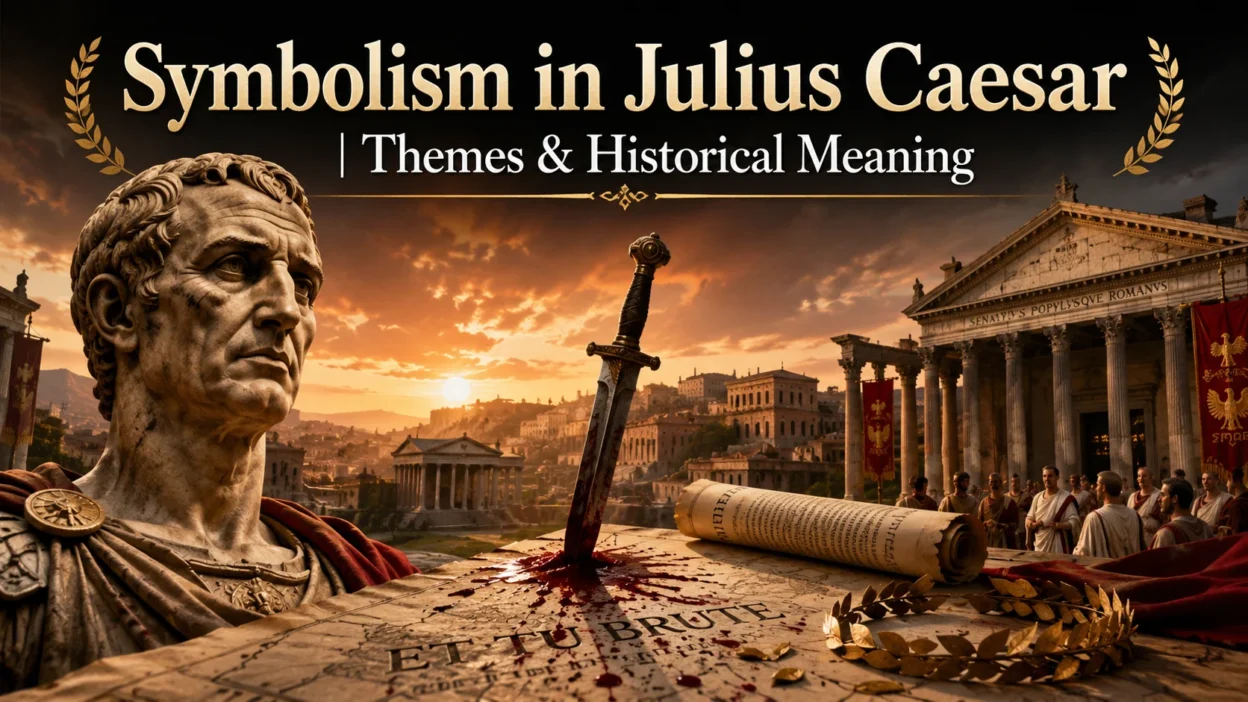
Symbolism in Julius Caesar | Themes, Literary & Historical Meaning shows how William Shakespeare turned Julius Caesar into a timeless tragedy through symbolism. This play, first staged in 1599, uses literary devices, symbols, power, ambition, political ambition, betrayal, moral conflict, loyalty, public duty, personal morality, and lasting consequences to connect historical events with readers today. The many layers of meaning, layered narrative, historical meaning, literary meaning, and lasting themes keep it relevant in literature and modern culture.
The story explores the struggle between fate and free will through omens, dreams, letters, weather, supernatural signs, and unseen forces. These details make readers think about human destiny, human nature, and the choices people make. The characters, events, objects, natural elements, and recurring motifs reveal universal truths, while personal interactions, political intrigue, political symbolism, and moral responsibility guide the plot toward its tragic outcome, leaving people to wonder if everything is predestined or self-inflicted.
In Rome, the collective identity of the people is reflected through Caesar, a leader who also becomes a threat of tyranny. Brutus represents honor, friendship, and duty through his symbolic roles, creating lasting emotional impact and intellectual impact. These ideas continue to offer meaningful life lessons for modern readers.
Quick Answer
Symbolism in Julius Caesar mainly represents the struggle between power and freedom, personal loyalty and public duty, and fate versus free will. In the United States, the play is often viewed as a warning about political ambition, fragile democracy, and the responsibilities of citizens and leaders.
TL;DR
- • Caesar symbolizes political power and ambition.
- • The crown represents authority and temptation.
- • Blood symbolizes sacrifice and guilt.
- • Rome reflects both greatness and political instability.
- • Omens highlight fate, fear, and uncertainty.
- • The play remains relevant in modern American politics.
Read more: Lavender Symbolism: Spiritual Meaning, Healing & Calm
Overview of Symbolism in Julius Caesar
Why Symbolism Matters
Shakespeare rarely included details without purpose. Nearly every object, place, and event in Julius Caesar represents a larger idea about politics, morality, or human behavior.
For American readers, these symbols help explain why the play continues to influence conversations about leadership and democracy.
Major Symbols at a Glance
• Caesar’s crown symbolizes political authority.
• Daggers represent betrayal hidden behind friendship.
• Blood reflects guilt and sacrifice.
• Rome symbolizes both civilization and corruption.
• Storms suggest political chaos.
• Ghosts symbolize conscience and unresolved conflict.
Historical Background Behind the Play
Ancient Rome and Political Change
The story comes from one of Rome’s most dramatic historical moments. Julius Caesar’s growing influence created fear that the Roman Republic would become a monarchy.
Shakespeare adapted these events to explore universal questions instead of writing a history lesson.
Historical Influences
• Roman republican ideals valued shared political power.
• Civil wars weakened public trust.
• Military victories increased Caesar’s popularity.
• Political rivalry divided Roman leaders.
• Public speeches shaped political opinion.
Julius Caesar as a Symbol
Caesar Represents More Than One Man
Although Caesar dies midway through the play, his symbolic influence grows even stronger afterward. His presence reminds readers that ideas often survive longer than individuals.
For many readers, Caesar represents both greatness and the dangers of excessive ambition.
Symbolic Meanings
• Leadership and authority.
• Fame beyond death.
• Human pride.
• Political influence.
• National unity.
• The cost of ambition.
The Symbolism of the Crown and Power
Authority or Temptation?
One of the most important symbols is the crown offered to Caesar. Although he refuses it publicly, the repeated offers raise questions about his true intentions.
Americans often interpret this symbol through the lens of constitutional government, where concentrated power is viewed with caution.
Meanings of the Crown
• Political ambition.
• Public image.
• Leadership responsibility.
• Personal temptation.
• Public expectations.
• The balance of power.
Blood, Daggers, and Betrayal
Violence with Symbolic Meaning
The assassination scene is one of literature’s most memorable moments. Blood and daggers become symbols of broken trust rather than simple violence.
The conspirators believe they are saving Rome, yet their actions create even greater conflict.
What These Symbols Represent
• Betrayal by trusted friends.
• Political sacrifice.
• Personal guilt.
• Moral responsibility.
• Revenge.
• National division.
Omens, Dreams, and Fate
Warnings Throughout the Story
Strange weather, prophetic dreams, and mysterious signs appear repeatedly before Caesar’s death. These symbols create suspense while raising questions about destiny.
Many readers debate whether fate controls events or whether human choices matter more.
Common Omens
• Thunderstorms.
• Calpurnia’s dream.
• The Soothsayer’s warning.
• Unusual animal behavior.
• Ghostly appearances.
• Supernatural signs.
Rome as a Symbol
More Than a City
Rome represents civilization, political order, and national identity. At the same time, it also symbolizes corruption, conflict, and fragile institutions.
This dual meaning explains why the setting remains powerful centuries later.
| Context | Meaning in the USA | Common Associations | Notes |
| Capitol | Democracy | Government | Public leadership |
| Senate | Shared power | Debate | Political responsibility |
| Streets | Public opinion | Citizens | Democracy in action |
| Battlefield | National conflict | Sacrifice | Consequences of division |
| Capitol steps | Political transition | Leadership | Historical change |
Symbolism in the United States
Why Americans Still Read Julius Caesar
The play has remained popular in American schools because it raises questions that democratic societies still face today.
Its symbols encourage discussion rather than simple answers.
Modern American Connections
• Responsible leadership.
• Civic participation.
• Political accountability.
• Public trust.
• Freedom versus authority.
• Peaceful transitions of power.
Cross-Cultural and Spiritual Meanings
Universal Human Themes
Although rooted in Roman history, the symbols extend beyond one culture. Around the world, readers recognize similar themes of honor, sacrifice, loyalty, and justice.
Different cultures may interpret individual symbols differently, but the central ideas remain widely understood.
Shared Symbolic Ideas
• Honor.
• Justice.
• Fate.
• Loyalty.
• Courage.
• Human weakness.
Emotional and Psychological Symbolism
Inner Conflict Drives the Story
The characters constantly struggle between emotion and reason. Shakespeare uses symbols to reveal thoughts that characters rarely express openly.
Brutus especially becomes a symbol of moral conflict.
Psychological Meanings
• Fear of failure.
• Personal guilt.
• Moral uncertainty.
• Inner conflict.
• Loyalty.
• Public responsibility.
Modern Meaning and Popular Culture
Why the Symbols Still Matter
The play continues to appear in theaters, films, classrooms, and political discussions. Modern audiences often recognize its symbolism without realizing its Roman origins.
Its themes remain useful because societies still debate leadership, freedom, and public responsibility.
Modern Uses
• School literature courses.
• Stage performances.
• Political commentary.
• Historical documentaries.
• Social media discussions.
• Leadership training.
Misunderstandings and Changing Interpretations
Looking Beyond Simple Good vs. Evil
Many people assume the play praises or condemns one side completely. Instead, Shakespeare presents complex characters whose motives overlap.
Modern readers usually focus more on ethical choices than on choosing heroes or villains.
Common Misunderstandings
• Caesar is not simply a tyrant.
• Brutus is not simply a hero.
• Cassius represents more than jealousy.
• The conspirators disagree among themselves.
• The ending questions political violence.
Lasting Legacy of the Play
Why It Endures
Few literary works remain relevant across four centuries. Julius Caesar survives because its symbolism addresses questions every generation faces.
Power, loyalty, justice, and responsibility never lose their importance.
Lasting Lessons
• Democracy requires active citizens.
• Leadership demands humility.
• Ambition needs limits.
• Friendship involves trust.
• Political violence has lasting consequences.
• Ideas often outlive individuals.
Conclusion
Symbolism in Julius Caesar | Themes, Literary & Historical Meaning continues to inspire readers because William Shakespeare’s symbols reveal deep truths about power, ambition, loyalty, and human choices. Through omens, dreams, political symbolism, and the struggles of characters like Caesar and Brutus, the play explores how personal decisions can shape history. The symbols are not limited to ancient Rome; they still connect with modern discussions about leadership, responsibility, morality, and the consequences of unchecked ambition.
FAQs
1. What is the main symbolism in Julius Caesar?
The main symbolism in Julius Caesar includes fate, power, betrayal, ambition, and moral conflict. Shakespeare uses symbols like omens, storms, and dreams to show the tension between destiny and human choices.
2. What do omens symbolize in Julius Caesar?
Omens symbolize warnings, fate, and supernatural forces. They suggest that events may be guided by unseen powers, but the characters’ actions also contribute to the tragic outcome.
3. What does Caesar symbolize in the play?
Caesar symbolizes both strong leadership and the danger of excessive power. His character represents the conflict between admiration for a great leader and fear of tyranny.
4. What does Brutus symbolize in Julius Caesar?
Brutus symbolizes honor, loyalty, and moral struggle. His actions show the difficulty of choosing between personal relationships and public responsibility.
5. Why is symbolism important in Julius Caesar?
Symbolism makes the play more meaningful by adding deeper layers of interpretation. It helps readers understand themes such as political ambition, human nature, fate, and the consequences of personal decisions.