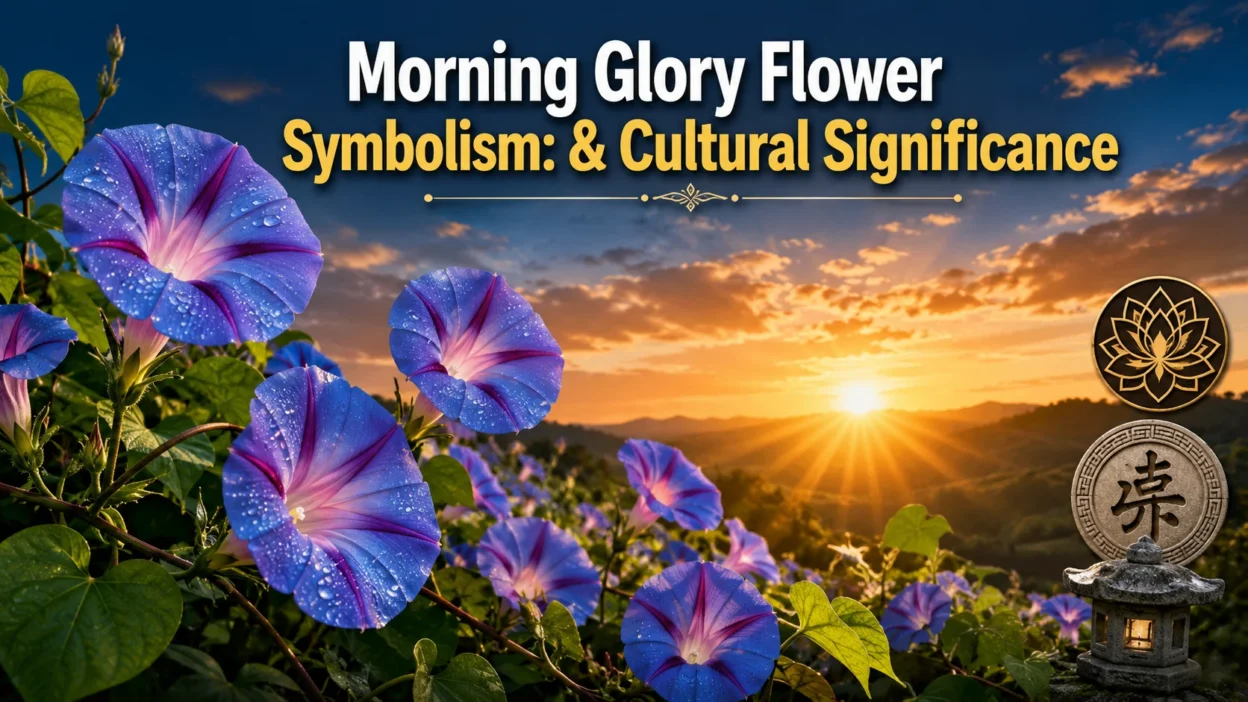
The morning glory flower is admired for its fleeting beauty and rich layers of meaning. This climbing vine with trumpet-shaped flowers, soft petals, and colorful blossoms opens at dawn and sunrise, then close, fade, and disappear by sunset or afternoon. The flower has become a symbol of impermanence, the transient nature of life, and the fleeting nature of life.
From my observation of flower traditions, few blooms capture the essence of life as effectively as the morning glory flower. It holds an enduring place in human imagination because it represents love, affection, renewal, resilience, beauty, delicate beauty, delicate charm, happiness, peace, joy, and the ability to bring joy into people’s lives. These profound meanings strengthen its connection with nature, mindfulness, spirituality, and everyday life.
The famous flower has a long history that stretches across geography, particularly Asia, China, and Japan, though its exact origins remain a subject of debate among botanists. It is believed to have originated in tropical regions and first appeared in Asia. During the era of Chinese dynasties, it was called Ya Zhi and served as a decorative element during festivals and weddings.
Quick Answer
Morning Glory Flower Symbolism in the USA usually points to affection, renewal, and the beauty of short-lived moments. It can also suggest undying love, longing, or a fresh start. Across other cultures, it often carries similar ideas of transience and devotion.
TL;DR
• Morning glories symbolize affection and renewal.
• Their blooms open early and fade fast.
• In the USA, they’re a September birth flower.
• Colors shift the message from purity to passion.
• They’re beautiful, but the seeds can be risky.
Read more: Horses Symbolism: Spiritual,Biblical, and Modern Meanings
What Morning Glory Flowers Look Like
Morning glories are twining vines, and some related species grow as shrubs. Most people know them for showy, funnel- or trumpet-shaped flowers that appear in blue, purple, pink, white, red, and related shades. The common morning glory has heart-shaped leaves and blooms that open in the morning and close later in the day.
Shape, Color, and Growth Habit
Their climbing habit matters symbolically. A morning glory does not sit still. It reaches upward, wraps around supports, and turns a plain fence into something alive. That makes it feel like a symbol of growth, movement, and staying power.
• Trumpet blooms suggest a voice or message.
• Twining stems suggest persistence and attachment.
• Heart-shaped leaves add warmth and tenderness.
• Dawn opening suggests hope at the start of day.
What Morning Glory Symbolizes
At its core, the flower tends to mean affection, renewal, and brief beauty. In flower-language traditions, it has also carried ideas of undying love and love in vain. That tension is part of its charm.
Core Meanings at a Glance
Because the bloom opens and fades so quickly, people often connect it with the idea that some moments are precious because they do not last. That is why the flower can feel romantic without being sentimental. It also works as a reminder to pay attention while the good thing is still here.
Why It’s Called Morning Glory
The name is simple, but it carries the whole story. The flower opens in the morning sun and closes later in the day, so the timing itself became part of its identity. The bloom acts like a daily ritual.
Bloom Timing and the Name
That rhythm gives the flower a natural sense of drama. It feels like a small sunrise event, then a quiet goodbye by afternoon. In symbolic terms, it suggests beginnings, transience, and the usefulness of paying attention early.
Historical Roots and Flower Language
Morning glories have old roots in the Americas and long ties to Asian garden culture. The common morning glory is native to Mexico and Central America, and related morning glory plants were used in pre-Hispanic Indigenous settings as ritual and medicinal plants. Later, the flower became part of ornamental gardening and flower-language traditions.
From Gardens to Victorian Meanings
In Victorian flower language, morning glory often stood for affection, love, or love that could not last. That history still shapes how Americans read it today. Even now, the flower feels old-fashioned in a good way, like a note from another era that still lands emotionally.
Japanese and Mesoamerican Threads
In Japan, morning glory culture became especially rich. The flower was introduced there as a medicinal plant about 1,200 years ago, then became a celebrated ornamental linked with summer, ephemerality, and artistic beauty. In another historical thread, a member of the morning-glory family, ololiuqui, was used in Indigenous ritual settings in parts of the Americas long before Hispanic contact.
Morning Glory in the United States
In the USA, morning glories show up in gardens, birth-flower lists, cottage-style décor, and gift bouquets. They are especially tied to September, where they serve as one of the month’s birth flowers. For many Americans, that makes them feel personal, seasonal, and nostalgic.
A Flower of Affection and Late-Summer Memory
American flower guides often describe morning glories as a sign of affection, undying love, or love that was never returned. That gives the flower a gentle ache, but not a tragic one. It feels like the kind of symbol people use for handwritten notes, birthday gifts, and sentimental garden spaces.
| Context | Meaning in the USA | Common Associations | Notes |
| Garden fence | Growth and reaching upward | Climbing vines, porch trellises | Looks lively and classic |
| September birth flower | Affection and remembrance | Birthdays, bouquets, cards | One of two September flowers |
| Morning bloom | New beginnings | Sunrise, daily renewal | The flower opens early |
| Romantic gift | Love and longing | Cards, wedding accents | Can feel sweet or wistful |
| Wild or overgrown patch | Beauty with a warning | Roadsides, vacant lots | Can spread fast in warm regions |
Why Americans Keep Returning to It
The flower fits American tastes in a few ways. It is vivid but familiar. It feels natural, yet it can still look poetic on a fence, in a porch planter, or in a backyard photo. Its meaning is broad enough for many uses, but specific enough to feel intentional.
Color Meanings of Morning Glories
Color changes the message. The flower’s palette often includes blue, purple, pink, white, red, and sometimes lighter or mixed shades. Across flower-language sources, blue often leans toward affection or trust, pink toward romance or gentleness, white toward purity and peace, and red toward strong passion or a strong heart.
What Different Hues Suggest
Blue is often the most familiar morning glory color, so many people read it as calm and dreamy. White feels cleaner and more peaceful. Pink softens the symbolism and makes it feel more tender, while red turns the message warmer and more intense.
Color Meanings at a Glance
• Blue suggests affection, trust, and admiration.
• Pink suggests romance and gentle affection.
• White suggests purity, peace, and innocence.
• Red suggests passion and a strong heart.
Spiritual and Cross-Cultural Meanings
Morning glories often carry spiritual meaning because they bloom and fade so quickly. In Japanese culture, they are linked with fleeting beauty and the passing of time. In Chinese folklore, they are often read through love and affection.
Japan, China, and Other Traditions
That cross-cultural pattern is easy to understand. A flower that opens at dawn and disappears by afternoon naturally suggests impermanence. In some settings, that impermanence feels sad. In others, it feels wise, because it reminds people to value what is here now.
Emotional and Psychological Associations
Morning glories often make people feel hopeful, nostalgic, or gently reflective. They can also feel playful because the bloom appears with the morning and then disappears. That daily cycle makes the flower feel alive in a very human way.
What the Flower Signals
For many people, it signals patience, devotion, and a love that does not need to shout. It also suggests softness without weakness. The vine keeps climbing, even though each bloom is brief. That combination can feel encouraging during hard seasons.
Modern Uses in Tattoos, Decor, and Social Media
Today, morning glories appear in tattoos, floral décor, stationery, and seasonal photos. They work well in designs because the flower shape is clear and elegant. Many people also use them in birth-flower gifts or as a symbol of personal growth.
Where You See It Today
In home décor, the flower adds softness to cottage, vintage, or garden-inspired styles. In tattoos, it can stand for a new chapter, a loved one, or a reminder to notice the early hours of life. On social media, it often appears in sunrise photos, porch gardens, and aesthetic floral posts.
A Few Common Modern Uses
• Birth flower gifts for September birthdays.
• Garden trellises and fence lines.
• Wedding flowers with a soft, nostalgic mood.
• Tattoos about renewal or memory.
• Seasonal posts about sunrise and early light.
Misunderstandings, Misuse, and Controversies
Morning glories are not just pretty. Some species spread so well that they can become weeds or invasive plants in certain regions, especially in warm parts of North America. That does not cancel the symbolism, but it does change how gardeners think about them.
Toxic Seeds and Invasive Growth
There is also a safety issue. The seeds of morning glory contain compounds that can cause illness, and even hallucinations, if enough are eaten. The ASPCA lists morning glory as toxic to dogs, cats, and horses. So the flower’s beauty should always be paired with care.
This creates a meaningful contrast. The flower looks delicate, but it can be vigorous in the garden and risky if misused. That contrast deepens its symbolism rather than weakens it. Beauty, after all, is often strongest when it comes with boundaries.
How Its Meaning Has Shifted Over Time
The meaning has widened over time. It once leaned heavily toward romance, affection, and fleeting love in older flower-language traditions. Today, it still carries those ideas, but Americans also read it as a birth flower, a garden favorite, and a symbol of fresh starts.
From Ephemeral Beauty to Personal Symbol
That shift matters. A flower that once mostly meant “love” can now mean identity, memory, resilience, and daily renewal. In modern life, people often want symbols that feel both beautiful and useful. Morning glories fit that need well.
Conclusion
The morning glory stands as more than a decorative garden plant. Its short-lived blooms remind us that beauty and opportunity often exist for only a brief moment. Across different cultures and periods of history, this flower has symbolized love, renewal, resilience, and the importance of appreciating life’s changing seasons. Whether viewed through a spiritual, artistic, or cultural lens, the morning glory encourages mindfulness and gratitude. Its enduring symbolism continues to inspire people seeking deeper meaning in nature and everyday experiences.
FAQs
What does the morning glory flower symbolize?
The morning glory commonly symbolizes love, renewal, resilience, and the fleeting nature of life. Because its blooms open at sunrise and fade later in the day, it is often linked to impermanence and living in the present moment.
Why is the morning glory important in Japanese culture?
In Japan, the morning glory is known as Asagao. It represents the temporary beauty of life and is associated with good luck, spiritual reflection, and artistic appreciation. The flower has appeared in Japanese art and seasonal traditions for centuries.
What is the meaning of morning glory in Chinese tradition?
In Chinese culture, the flower has been connected with happiness, peace, and love. Known by the name Ya Zhi in some historical references, it has also been used as a decorative element during festivals and weddings.
Do different morning glory colors have different meanings?
Yes. While meanings can vary by tradition, color variations often carry unique symbolism. Blue may represent peace and spirituality, pink can symbolize affection and joy, while purple is sometimes associated with wisdom and deeper understanding.
Why is the morning glory associated with mindfulness?
The flower’s brief blooming cycle serves as a reminder to appreciate the present. Its daily pattern of opening and fading encourages reflection on life’s impermanence and the value of finding beauty in ordinary moments.