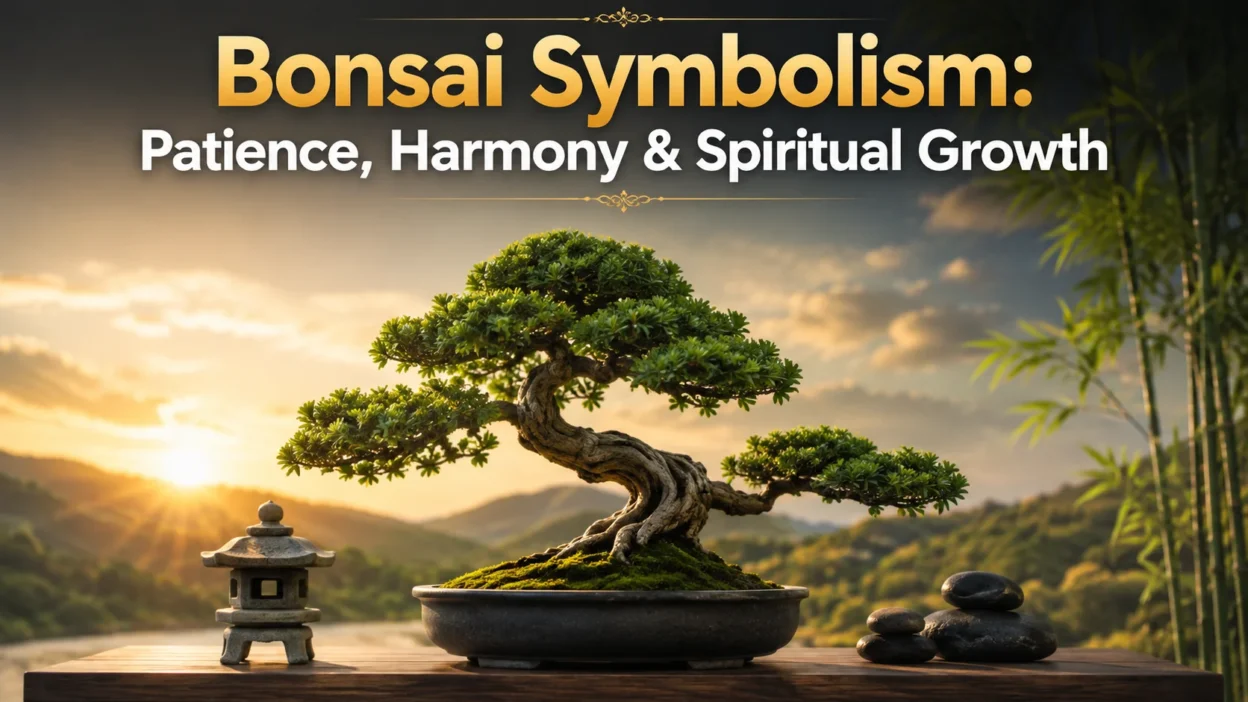
Bonsai Symbolism: Patience, Harmony & Spiritual Growth shows how bonsai trees express patience, harmony, balance, nature, and spiritual growth. A bonsai tree is a miniature, meticulously cultivated tree that becomes an aesthetic marvel and a symbol of patience, harmony, and balance. In Japanese culture, connected with Chinese horticultural traditions, bonsai represents the art of living thoughtfully, nurturing life, and connecting with nature. Through careful cultivation, this ancient practice reveals how a small tree reflects spirituality, deeper symbolism, and slow growth. This guide explores the symbolism of bonsai, including spiritual meaning, cultural significance, its role in art and literature, modern applications, and valuable life lessons found through dream interpretations.
The centuries-old art of cultivating trees in shallow containers allows bonsai artists to capture the form and spirit of full-sized trees. The word origin comes from the Japanese language, where bon means tray and sai means plant. The practice originated in China more than a thousand years ago and later evolved in Japan into a refined art form based on asymmetry, proportion, and careful design. Bonsai are not genetically miniature trees; they are ordinary tree species like pines, maples, junipers, and elms, which are carefully shaped to display age, resilience, natural beauty, and a scaled form.
These miniature potted trees are pruned and shaped to prevent growth beyond their intended full size, creating a miniature landscape that highlights craftsmanship, structure, and longevity. Different specific tree species and shapes can represent various spiritual meanings, including wisdom, endurance, strength, and transformation. The history of bonsai, tree symbolism, and spiritual significance show how this Japanese art connects cultural meaning, artistic expression, literary use, contemporary uses, personal growth, imagination, creativity, and philosophy. Bonsai trees symbolize a lasting journey of learning and meaningful interpretation.
Quick Answer
What Does Bonsai Symbolism Mean?
Bonsai Symbolism: Patience, Harmony & Spiritual Growth represents patience, balance, resilience, and the journey of personal development. In the USA, bonsai often symbolizes mindfulness and intentional living, while globally it reflects harmony between people and nature.
TL;DR
- Bonsai symbolizes patience, balance, and lifelong growth.
- Its roots connect to ancient Asian gardening traditions.
- Americans often associate bonsai with mindfulness and calm spaces.
- The tree represents resilience through careful transformation.
- Modern bonsai appears in homes, art, tattoos, and wellness spaces.
Read more: Mantis Symbolism | Spiritual Meaning, Culture & Life Lessons
What Is Bonsai Symbolism?
Bonsai symbolism comes from the meaning people attach to miniature trees shaped through careful cultivation. The tree’s small size does not represent weakness. Instead, it highlights strength, endurance, and beauty found through patience.
For many enthusiasts, bonsai is a living artwork. Every branch, root, and curve reflects years of attention. The process teaches that growth is not always about speed but about direction and care.
The Visual Elements Behind Bonsai Meaning
Bonsai trees communicate symbolism through their appearance and design.
• Deep roots represent stability and connection.
• Twisted trunks suggest endurance through challenges.
• Balanced branches reflect harmony and order.
• Small size represents simplicity and focus.
• Green leaves symbolize renewal and vitality.
Common Meanings Associated With Bonsai
Today, bonsai is often connected with several important ideas.
• Patience during long personal journeys.
• Peaceful awareness of the present moment.
• Respect for nature’s natural patterns.
• Strength developed through challenges.
• Balance between control and acceptance.
The Ancient History of Bonsai Symbolism
Bonsai’s history reaches back thousands of years, with roots connected to ancient Chinese landscape traditions before becoming strongly associated with Japan. Early practices focused on creating miniature versions of natural landscapes.
The tradition evolved through different eras. Eventually, Japanese artists developed bonsai into a refined practice emphasizing simplicity, balance, and harmony.
Ancient Chinese Roots
The earliest forms of miniature tree cultivation appeared in China through the art of creating small landscapes. These designs reflected ideas about nature, balance, and the relationship between humans and the environment.
The practice was influenced by philosophical traditions that valued harmony and careful observation. Small landscapes represented the larger natural world in a personal space.
Japanese Development
Japan transformed bonsai into a highly respected artistic discipline. Practitioners focused on simplicity, natural beauty, and the careful shaping of living trees.
Over time, bonsai became connected with ideas such as:
• Quiet reflection and awareness.
• Respect for natural imperfections.
• Careful craftsmanship and discipline.
• Appreciation of seasonal change.
How Bonsai Meaning Changed Over Time
Bonsai once existed mainly within specialized artistic circles. Today, it is enjoyed worldwide as a symbol of calmness, creativity, and personal growth.
What Does Bonsai Symbolize in America?
In the United States, bonsai has developed a unique meaning shaped by gardening culture, wellness movements, and personal expression. Many Americans view it as a symbol of slowing down in a fast-moving world.
Bonsai became especially popular among hobbyists who valued patience and craftsmanship. Today, it appears in homes, offices, gardens, and meditation spaces.
Bonsai and American Values
Many Americans connect bonsai with values such as:
• Personal improvement through consistent effort.
• Finding peace during stressful moments.
• Creating beauty through dedication.
• Respecting natural processes.
• Building meaningful hobbies.
Bonsai in Everyday American Life
Bonsai often appears in spaces designed for relaxation and reflection.
| Context | Meaning in the USA | Common Associations | Notes |
| Home decor | Calm and natural beauty | Peaceful spaces | Often used as living art |
| Offices | Focus and balance | Productivity | Represents thoughtful work |
| Gardens | Connection with nature | Creativity | Combines art and horticulture |
| Gifts | Respect and appreciation | Friendship | Often symbolizes lasting care |
Spiritual Meaning of Bonsai Trees
Bonsai has spiritual associations in several traditions, especially those emphasizing harmony, awareness, and connection with nature. These meanings vary between individuals and cultures.
The tree itself is not universally tied to one belief system. Instead, many people interpret bonsai through personal reflection and cultural understanding.
Connection With Mindfulness
Many people associate bonsai with mindful living because caring for the tree requires attention and patience.
The practice encourages people to:
• Observe small changes over time.
• Appreciate the present moment.
• Accept natural imperfections.
• Practice steady dedication.
Symbol of Inner Growth
A bonsai tree can represent personal transformation. Its shaped branches suggest that growth involves both freedom and guidance.
Emotional and Psychological Meaning of Bonsai
Bonsai often creates feelings of calm, focus, and connection. Its slow growth reminds people that important achievements usually require consistent effort.
The tree can become a visual reminder of personal goals and emotional balance.
Feelings Associated With Bonsai
People commonly connect bonsai with:
• Tranquility during busy routines.
• Confidence built through patience.
• Hope for future growth.
• Stability during uncertain times.
• Appreciation for simple moments.
Bonsai as a Personal Symbol
Some people choose bonsai imagery because it reflects their personal values. A bonsai tattoo, artwork, or decoration may represent a commitment to patience and resilience.
Bonsai Symbolism in Tattoos and Art
Bonsai imagery has become popular in modern creative expression. Artists often use the tree to communicate ideas about strength, peace, and personal evolution.
Unlike some symbols with fixed meanings, bonsai allows individual interpretation.
Bonsai Tattoo Meanings
Common interpretations include:
• Overcoming difficult experiences.
• Maintaining balance through change.
• Respecting life’s natural timing.
• Growing stronger through patience.
Bonsai in Modern Design
Bonsai appears in many creative forms.
• Minimalist artwork.
• Nature-inspired decorations.
• Personal journals and illustrations.
• Digital wellness content.
• Meditation-inspired spaces.
The Symbolism of Bonsai Colors and Forms
The appearance of a bonsai can influence how people interpret its meaning. Different styles highlight different emotional qualities.
Color Meanings
Although bonsai meaning is not determined only by color, certain associations are common.
• Green leaves suggest renewal and vitality.
• Dark trunks suggest strength and endurance.
• Flowering bonsai suggest beauty and celebration.
• Autumn colors suggest change and acceptance.
Tree Shapes and Their Meanings
The shape of a bonsai often reflects artistic choices.
• Upright forms represent strength and stability.
• Curved forms suggest flexibility.
• Wide branches represent openness.
• Exposed roots suggest connection and history.
Cross-Cultural Meanings of Bonsai
Bonsai has traveled across the world and gained different interpretations. While its origins are strongly connected to East Asian traditions, people everywhere have adapted its symbolism.
In many cultures, miniature trees represent the relationship between humanity and nature.
Global Interpretations
Around the world, bonsai may represent:
• Respect for natural beauty.
• Patience and dedication.
• Artistic expression.
• Balance between simplicity and complexity.
Different Personal Perspectives
Some people view bonsai as a spiritual practice. Others appreciate it mainly as gardening or art. Both perspectives reflect the tree’s ability to inspire reflection.
Bonsai in Modern Culture and Social Media
Today, bonsai appears in online communities, lifestyle content, and creative spaces. Many people share their trees as examples of patience and personal achievement.
Social media has helped introduce bonsai to younger audiences who appreciate slow living and nature-focused hobbies.
Modern Uses of Bonsai
Bonsai is commonly seen in:
• Home offices.
• Wellness spaces.
• Gardening communities.
• Artistic photography.
• Personal collections.
Why Bonsai Appeals Today
Modern life often moves quickly. Therefore, bonsai represents a slower approach based on care, attention, and gradual progress.
Misunderstandings and Controversies Around Bonsai
Because bonsai comes from specific cultural traditions, misunderstandings can occur when people view it only as decoration. The practice has deeper historical and artistic roots.
However, bonsai ownership itself is not limited to one culture. People worldwide respectfully practice and appreciate it.
Common Misunderstandings
Some misconceptions include:
• Believing bonsai trees are naturally tiny.
• Seeing bonsai only as decoration.
• Ignoring the cultural history behind the art.
• Assuming every bonsai has identical meanings.
Respectful Appreciation
Learning about bonsai traditions helps people understand why the practice has remained meaningful for generations.
How Bonsai Symbolism Has Changed Over Time
Bonsai meaning has expanded as the art moved across countries and generations. While traditional meanings remain important, modern interpretations continue to grow.
Today, bonsai represents both cultural heritage and personal expression.
Traditional Meanings
Older interpretations focused on:
• Harmony with nature.
• Artistic discipline.
• Careful observation.
• Connection with landscapes.
Modern Meanings
Contemporary views often emphasize:
• Mental balance.
• Personal growth.
• Simple living.
• Emotional resilience.
Why People Give Bonsai Trees as Gifts
Bonsai is often chosen as a meaningful gift because it represents lasting care. Unlike temporary presents, it requires ongoing attention and can grow for many years.
Gift Symbolism
A bonsai gift may express:
• Appreciation for someone’s journey.
• Wishes for peace and success.
• Respect for patience and dedication.
• A connection that continues growing.
Conclusion
Bonsai symbolism teaches that true growth does not always come from speed or size but from patience, care, and balance. These carefully shaped trees represent harmony between humans and nature, reminding us to appreciate slow progress, resilience, and inner transformation. From its roots in Japanese culture and Chinese horticultural traditions to its modern role in art, meditation, and personal reflection, bonsai continues to inspire people around the world.
The meaning of bonsai goes beyond a decorative plant. It reflects the beauty of discipline, the strength found through endurance, and the wisdom gained through thoughtful living. Whether viewed as a symbol of spiritual growth, natural connection, or lifelong learning, the bonsai tree remains a powerful reminder that small beginnings can create profound meaning.
FAQs
1. What does a bonsai tree symbolize?
A bonsai tree symbolizes patience, harmony, balance, resilience, wisdom, and spiritual growth. It represents the connection between humans, nature, and the journey of personal development.
2. What is the spiritual meaning of bonsai trees?
The spiritual meaning of bonsai trees is linked to inner peace, mindfulness, reflection, and the acceptance of gradual growth. Many people see bonsai as a reminder to live thoughtfully and stay connected with nature.
3. Why is bonsai associated with Japanese culture?
Bonsai is strongly associated with Japanese culture because Japan refined the practice into a respected art form focused on balance, simplicity, asymmetry, and harmony with nature. However, its early origins trace back to ancient Chinese horticultural traditions.
4. Do different bonsai tree species have different meanings?
Yes, different bonsai tree species can represent different qualities. For example, pines often symbolize longevity and endurance, maples can represent transformation and beauty, while junipers are often connected with resilience and strength.
5. What life lessons can bonsai teach us?
Bonsai teaches valuable lessons about patience, discipline, adaptability, and appreciation for small changes. Its slow cultivation process reminds people that meaningful growth requires time, care, and consistent effort.