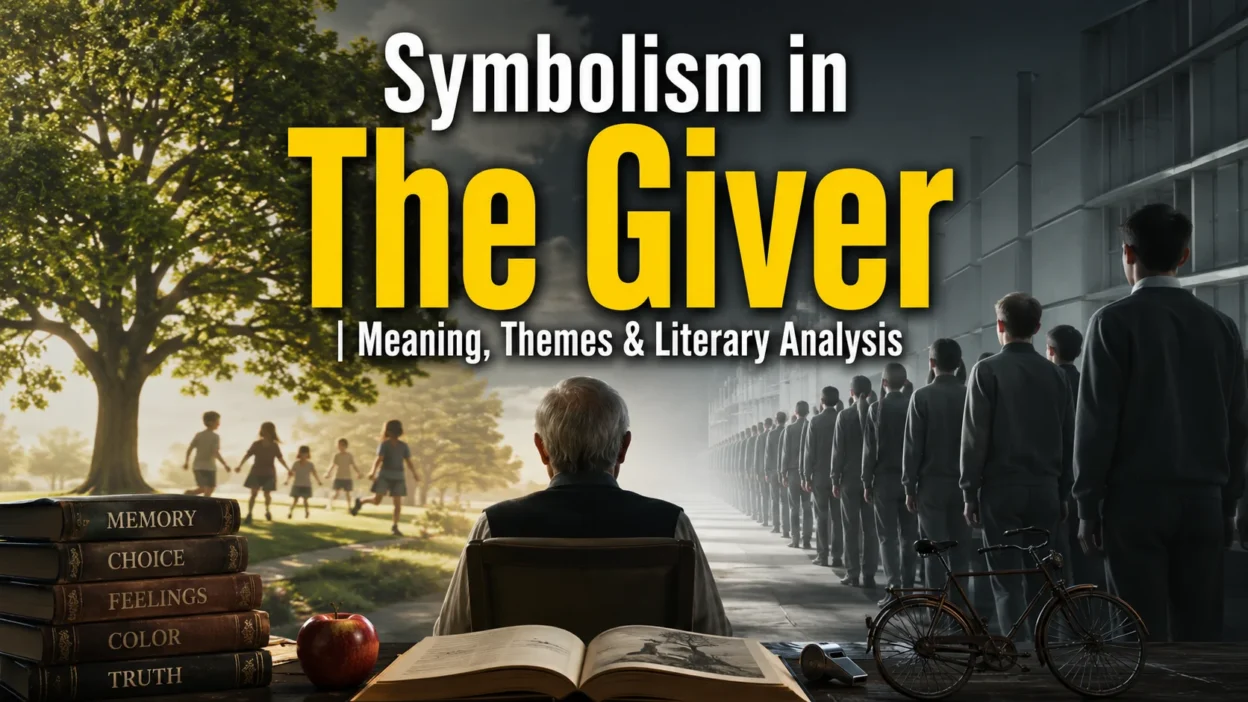
Explore Symbolism in The Giver | Meaning, Themes & Literary Analysis through Lois Lowry’s world where meanings reveal freedom, memory, and identity. Lois Lowry’s The Giver is a masterpiece of dystopian literature that shows how a society without emotion, color, and choice may appear perfect on the surface while hiding serious issues. The seemingly perfect community creates a controlled world where symbolism reveals major themes such as freedom, individuality, memory, and the human experience. Through the deeper significance of objects, people, and experiences, the novel explains how control and conformity influence human life. Literary works often use simple details to express powerful meanings, and Lowry’s use of colors, memories, the river, and the sled works as a symbolic tool to teach, challenge, and inspire readers.
The article focuses on exploring Jonas and other recurring symbols, their meanings, and their connection to broader life lessons and philosophical insights. The central role of symbols in the novel does not depend on dramatic magical objects or fantasy creatures, but on everyday items and characters that communicate deeper ideas. The story uses symbols to uncover hidden problems inside a peaceful and orderly community, showing the cost of eliminating pain and losing emotional depth. These important examples help students and readers understand the message while providing a helpful guide for analyzing symbolism and understanding the structure of the story.
The newchild Gabriel becomes a powerful symbol of hope, starting over, and regeneration in The Giver. Like many babies in literature, Gabriel represents a fresh beginning because he is still young, has not fully absorbed the customs and rules of the community, and remains receptive to the powerful memories that Jonas transmits. When Jonas takes Gabriel to save Gabriel’s life, this gesture becomes symbolic of his resolve to change things and search for a new life in Elsewhere. Their struggles to keep Gabriel alive reflect the challenge of protecting ideals during difficulty. These motifs represent the valuable aspects of a literary work, allowing students to use analysis to explore complex concepts, abstract ideas, and literary elements through a storyboard, visual understanding, and classroom activities based on Common Core ELA standards, best practices, and supplementary lesson plan steps that help introduce and explain ideas with proper assistance.
Quick Answer
Symbolism in The Giver represents the importance of memory, individuality, emotions, and freedom in human life. In the USA, the novel’s symbols often connect with ideas of personal rights, creativity, and the dangers of removing personal choice.
TL;DR
• Colors symbolize emotions, awareness, and personal freedom.
• Memories represent history, wisdom, and human understanding.
• Sameness reflects control and loss of individuality.
• The Giver symbolizes knowledge, sacrifice, and responsibility.
• Jonas represents courage, growth, and independent thinking.
Read more: Grey Color Symbolism: Meaning, Emotions & Life Lessons
What Is the Symbolism in The Giver?
The symbolism in The Giver comes from the objects, settings, and characters that represent larger human ideas. Lowry does not simply create a fictional community; she builds a symbolic world about choices and consequences.
The novel’s symbols are easy to recognize because they appear throughout Jonas’s journey. Each symbol reveals something about emotions, society, or human nature.
Major Symbols in The Giver
• Colors represent emotions and deeper awareness.
• Memories represent truth and human history.
• The community represents controlled perfection.
• The Receiver represents the burden of knowledge.
• The river represents change and uncertainty.
Why Symbolism Matters in the Novel
Symbols help readers understand ideas that cannot be explained directly. Instead of telling readers that freedom matters, Lowry shows what happens when freedom disappears.
The symbols also make the story relatable for young and adult readers. They connect fictional events with real questions about society.
The History and Background of The Giver’s Symbolism
Understanding the origins of The Giver’s themes helps explain why its symbols feel universal. The novel draws from long traditions of storytelling about memory, knowledge, and human choices.
Lowry published The Giver in 1993, during a period when many writers explored questions about technology, social control, and individuality. The book became widely discussed in American schools because of these themes.
Symbolic Roots in Literature
Many older stories use similar ideas:
• Knowledge often brings both power and responsibility.
• Hidden truths challenge comfortable societies.
• Heroes often leave safe worlds to discover reality.
• Memories preserve lessons from previous generations.
These patterns appear in myths, religious stories, and classic literature across many cultures.
The Archetype of the Awakening Hero
Jonas follows a common literary pattern: the awakening hero. He begins in an ordinary world but discovers hidden truths.
His journey reflects a timeless idea that personal growth often requires questioning accepted beliefs.
The Symbolism of Sameness in The Giver
Sameness is one of the most important symbols in the novel. It represents a society that removes differences to create order.
At first, the community appears peaceful. However, readers gradually discover that eliminating differences also removes important parts of humanity.
Sameness as Control
The community controls:
• Appearance
• Weather conditions
• Family structures
• Personal choices
• Emotional experiences
By removing uncertainty, the society also removes freedom.
Meaning for American Readers
In the United States, sameness is often connected with discussions about individuality and personal rights. The symbol raises questions about how much control a society should have over personal decisions.
The novel does not suggest that rules are always harmful. Instead, it explores what happens when rules remove human choice completely.
Color Symbolism in The Giver
Color is one of the strongest symbols in Lowry’s novel. Jonas lives in a world where people experience life without seeing its full richness.
When Jonas begins seeing colors, it represents his awakening.
The Meaning of Red
Red is the first color Jonas notices. It symbolizes:
• Emotion
• Love
• Passion
• Awareness
• Change
The red apple becomes a sign that Jonas can see beyond the limits of his community.
The Meaning of Other Colors
As Jonas discovers more colors, he begins understanding the complexity of human experience.
| Color or Visual Element | Meaning in The Giver | Common Associations | Notes |
| Red | Emotion and awareness | Love, passion, danger | First color Jonas recognizes |
| Blue | Depth and possibility | Calmness, reflection | Connected with wider understanding |
| Green | Life and growth | Nature, renewal | Represents natural experiences |
| Gray | Sameness and limitation | Control, emptiness | Reflects the controlled society |
Colors help show that a world without pain may also become a world without beauty.
Memory Symbolism in The Giver
Memory is central to the entire story. The community removes memories because they believe memories create suffering.
However, Jonas learns that memories also provide wisdom and meaning.
Memories as Human Identity
Memories represent:
• Family connections
• Historical knowledge
• Emotional understanding
• Cultural experiences
• Human lessons
Without memories, people lose the ability to understand their past.
The Role of The Giver
The Giver carries memories from generations before him. His role symbolizes the responsibility of protecting knowledge.
Although this responsibility causes pain, it also gives him a deeper understanding of life.
The Symbolism of Jonas in The Giver
Jonas represents growth, courage, and the search for truth. His transformation drives the entire story.
At the beginning, Jonas accepts his community without questioning it. Later, he becomes someone willing to challenge its beliefs.
Jonas as a Symbol of Change
Jonas represents:
• Curiosity
• Independence
• Compassion
• Moral courage
• Personal discovery
His ability to see colors symbolizes his ability to recognize hidden truths.
Jonas and American Ideas of Freedom
Many American readers connect Jonas with individual freedom. His story reflects the belief that people should have the ability to think, choose, and feel.
The Symbolism of The Giver Character
The Giver represents knowledge, sacrifice, and emotional responsibility. He carries memories that others cannot handle.
His character shows that wisdom can be both a gift and a burden.
The Giver’s Symbolic Meaning
The Giver represents:
• The keeper of history
• The voice of experience
• The cost of knowledge
• The importance of compassion
He teaches Jonas that suffering is connected to love and understanding.
The River Symbolism in The Giver
The river represents movement, change, and uncertainty. Unlike the controlled community, the river cannot be fully controlled.
Nature becomes a symbol of freedom and unpredictability.
Why the River Matters
The river connects to themes of:
• Escape
• Transformation
• New beginnings
• Unknown possibilities
Jonas’s journey toward the river represents his movement away from control and toward discovery.
Emotional and Psychological Meaning of The Giver’s Symbols
The symbols in the novel explore how people experience emotions and identity.
A world without sadness may seem attractive, but Lowry suggests that emotions create meaning.
Psychological Themes
The novel explores:
• The need for emotional connection
• The importance of personal choice
• The value of difficult experiences
• The relationship between pain and happiness
The story suggests that human experiences are connected. Removing one feeling can affect all others.
Modern Uses and Cultural Impact of The Giver Symbolism
Today, The Giver continues to influence discussions about society, technology, and personal freedom.
Its symbols appear in classrooms, book discussions, artwork, and online conversations.
Modern Interpretations
Readers often connect the novel’s symbols with:
• Digital privacy concerns
• Social expectations
• Artificial intelligence discussions
• Emotional authenticity
• Personal identity
The story remains popular because its questions still feel relevant.
Spiritual and Cross-Cultural Meanings in The Giver
Although The Giver is not a religious text, many cultures recognize its themes.
Ideas about memory, wisdom, and transformation appear in many traditions.
Universal Symbolic Connections
Across cultures:
• Light often represents knowledge.
• Journeys often represent personal growth.
• Elders often represent wisdom.
• Nature often represents renewal.
These shared patterns help explain why the novel connects with readers worldwide.
Misunderstandings and Controversies Around The Giver
Because The Giver discusses difficult topics, readers sometimes interpret its message differently.
Some view the novel mainly as a warning against control. Others see it as a discussion about balancing safety and freedom.
Common Misunderstandings
• The book does not reject all rules.
• The community is not simply “bad” because it seeks peace.
• The story focuses on balance between comfort and humanity.
The symbolism encourages discussion rather than providing one simple answer.
How The Giver’s Symbolism Has Changed Over Time
The meaning of The Giver has expanded as society has changed. Earlier readers focused on control and individuality.
Today, many readers also connect the story with technology, emotional awareness, and personal identity.
Changing Interpretations
Modern audiences often explore:
• The role of technology in daily life
• The importance of human connection
• The value of personal memories
• The meaning of true happiness
The symbols remain flexible because they address universal human concerns.
Conclusion
Symbolism in The Giver | Meaning, Themes & Literary Analysis shows how Lois Lowry uses simple elements to explore complex ideas about humanity, freedom, and emotions. Through symbols like color, memory, the river, the sled, and Gabriel, the novel reveals the importance of choice, individuality, and experiencing life fully. The symbols in the story help readers understand that a world without pain may also become a world without true happiness, connection, and growth.
By examining these symbols, readers can see how The Giver moves beyond a typical dystopian story and becomes a reflection on human values. Jonas’s journey represents the courage to question control, protect memories, and seek a better future. Lowry’s use of symbolism continues to inspire discussions about identity, emotions, and what makes people truly human.
FAQs
1. What is the main symbolism in The Giver?
The main symbolism in The Giver focuses on memory, color, and choice. These symbols represent the importance of emotions, individuality, and freedom in human life.
2. What does color symbolize in The Giver?
Color symbolizes awareness, emotions, and the beauty of experiencing life fully. When Jonas begins seeing colors, it represents his growing understanding of the world beyond his community’s control.
3. What does Gabriel symbolize in The Giver?
Gabriel symbolizes hope, renewal, and a chance for change. His connection with Jonas represents the possibility of creating a more compassionate and meaningful future.
4. What does the sled symbolize in The Giver?
The sled symbolizes memories, discovery, and movement toward freedom. It connects Jonas with the past and represents his journey away from a controlled society.
5. Why is symbolism important in The Giver?
Symbolism is important because it helps readers understand deeper messages about freedom, conformity, emotions, and human experiences. These symbols reveal the hidden costs of creating a society without personal choices.