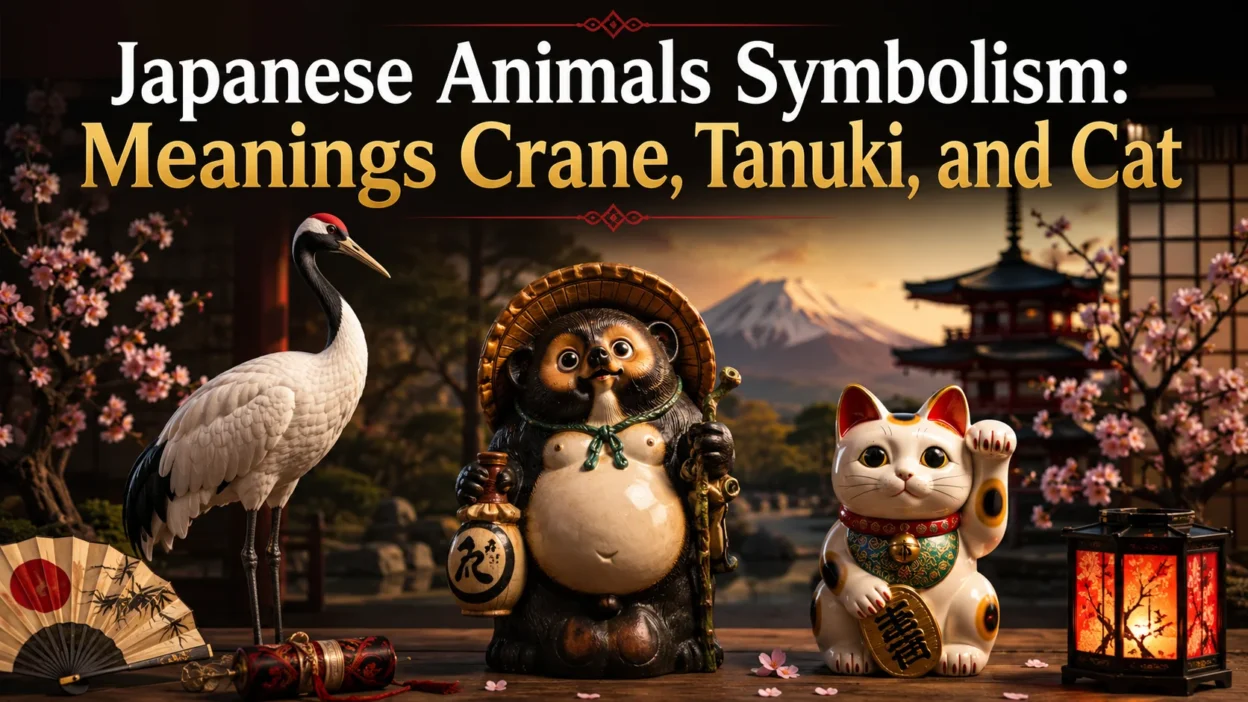
Japanese culture views animals as more than creatures of nature because their symbolism carries deep spiritual meaning through folklore, Shinto beliefs, Buddhist philosophy, and traditional stories. This connection between humans and nature shows how animals become messengers, protectors, and embodiments of important virtues. The key Japanese animals hold cultural significance, spiritual meanings, and modern interpretations in Japanese animal symbolism.
From ancient myths to modern art, literature, and everyday life, these symbolic animals carry layers of meaning linked with human emotions, values, and destiny. The mystical fox, resilient koi fish, graceful crane, playful tanuki, and iconic lucky cat have a unique place in Japanese traditions. They appear in temples, paintings, ceramics, shrines, business spaces, and modern decorations, representing luck, protection, transformation, and harmony with the unseen world.
The practice of Ikebana, the art of flowers, follows formal rules that regulate its use and application. It remains a highly respected art form, and Ikebana masters have an extraordinary reputation. Like animal symbolism, flowers reveal Japan’s revered traditions, significant historical events, and the deep bridge between the natural world, the spiritual, and human life. These symbols continue to inspire people through Japanese art, daily culture, and the Japanese way of life, bringing peace, love, success, and a meaningful spiritual connection.
Quick Answer
What Does Japanese Animals Symbolism Mean?
Japanese Animals Symbolism: Meanings of the Fox, Koi, Crane, Tanuki, and Lucky Cat often represents wisdom, perseverance, longevity, good fortune, and transformation. In the USA, these animals are commonly viewed as symbols of personal strength, hope, creativity, and connection with Japanese traditions.
TL;DR
• Foxes symbolize intelligence, mystery, and spiritual connections.
• Koi fish represent courage, endurance, and personal transformation.
• Cranes are linked with peace, longevity, and hope.
• Tanuki symbolize adaptability, humor, and prosperity.
• Lucky cats represent fortune and welcoming energy.
• Modern Americans use these symbols in art and identity.
Read more: Hummingbird Symbolism | Spiritual, Cultural & Life Meanings
What Are Japanese Animals Symbolism and Their Meanings?
Japanese animal symbols come from centuries of storytelling, spiritual beliefs, and artistic traditions. Unlike simple decorations, these creatures often carry layered meanings shaped by mythology and cultural history.
For American audiences, these symbols offer a window into Japanese ideas about nature. They show how animals can represent personal qualities, life lessons, and emotional journeys.
Animal Symbols as Cultural Stories
Animals in Japanese traditions often represent human experiences.
• Foxes reflect cleverness and hidden knowledge.
• Koi fish represent overcoming difficult challenges.
• Cranes symbolize peace and long life.
• Tanuki represent flexibility and playful energy.
• Lucky cats suggest welcome and prosperity.
These meanings are not fixed rules. Instead, they change depending on the artwork, story, and personal interpretation.
Common Symbolic Themes
Many Japanese animal symbols share similar ideas.
• Harmony between humans and nature
• Respect for life cycles
• Personal growth through challenges
• Hope during uncertain times
• Balance between seriousness and humor
Historical Roots of Japanese Animal Symbolism
Japanese animal symbolism developed through ancient beliefs, folklore, Buddhism, Shinto traditions, and artistic practices. Over time, these influences blended into a rich symbolic language.
For USA readers, understanding the history helps explain why these animals appear so often in Japanese-inspired designs today.
Ancient Nature Beliefs and Shinto Influence
Early Japanese traditions often viewed nature as filled with spiritual presence. Animals were sometimes connected with supernatural forces, protection, or messages from the unseen world.
Shinto beliefs especially emphasized relationships between humans, animals, landscapes, and spiritual beings. This helped create deep respect for creatures found in Japanese myths.
Buddhist and Folklore Connections
Buddhist ideas also shaped animal symbolism in Japan. Stories used animals to explore compassion, wisdom, patience, and moral choices.
Japanese folklore added another layer through legendary creatures and magical transformations. These stories helped animals become symbols of personality traits and life lessons.
Fox Symbolism in Japanese Culture
The fox, known as kitsune in Japanese, is one of Japan’s most recognizable symbolic animals. It appears in legends, artwork, festivals, and spiritual traditions.
In the USA, fox imagery is often connected with intelligence, independence, and mystery. Many people choose fox designs because they suggest clever thinking and adaptability.
Spiritual and Mythological Meaning of Kitsune
Foxes are strongly connected with Inari Ōkami traditions, where they are viewed as messengers.
Common fox associations include:
• Wisdom and cleverness
• Protection and guidance
• Transformation and mystery
• Connection between worlds
However, folklore also presents foxes as complex beings. Some stories describe them as playful tricksters, showing both positive and challenging qualities.
Fox Symbolism in Modern America
Today, fox imagery appears in tattoos, clothing, illustrations, and fantasy media. American audiences often interpret foxes as symbols of independence and creativity.
A fox tattoo may represent:
• Personal intelligence
• Survival skills
• Adaptability during change
• Appreciation for nature
Koi Fish Symbolism: Strength and Transformation
Koi fish are among the most popular Japanese symbols worldwide. Their bright colors and flowing movements make them common in paintings, gardens, tattoos, and decorative art.
In the USA, koi symbolism is especially popular because it connects with ideas of persistence and overcoming obstacles.
The Legend of the Koi
A famous Japanese and Chinese-influenced legend tells of koi swimming upstream toward a powerful waterfall. According to the story, a koi that succeeds transforms into a dragon.
This story created associations with:
• Determination
• Achievement
• Courage
• Transformation
Meaning of Koi Colors
Different koi colors often carry different interpretations.
| Koi Color | Meaning in the USA | Common Associations | Notes |
| Red | Love and passion | Strength, family bonds | Often used in meaningful artwork |
| Gold | Success and abundance | Wealth, achievement | Popular in decorative designs |
| Black | Overcoming struggles | Resilience, change | Often linked with personal journeys |
| White | Peace and purity | New beginnings | Common in symbolic art |
Crane Symbolism: Peace, Hope, and Longevity
The crane is one of Japan’s most respected symbolic animals. Its graceful appearance and long lifespan helped make it a symbol of endurance and hope.
American audiences often recognize cranes through stories about peace, especially those connected with paper crane traditions.
Ancient Meaning of the Crane
In Japanese culture, cranes are associated with long life and good fortune. Traditional beliefs often viewed them as elegant creatures connected with happiness and lasting relationships.
The phrase “a thousand-year crane” reflects the idea of longevity.
Crane Symbolism in American Culture
Crane imagery appears in art, memorials, and peace-related projects.
Common meanings include:
• Hope after hardship
• Healing and renewal
• Peaceful intentions
• Lasting love
The crane remains a powerful symbol because it combines beauty with emotional strength.
Tanuki Symbolism: Humor, Luck, and Adaptability
The tanuki is a Japanese animal often confused with other creatures because of its unusual appearance. It resembles a raccoon but belongs to the dog family.
Tanuki symbolism is unique because it combines humor with prosperity.
Folklore Meaning of Tanuki
In Japanese stories, tanuki are famous for their ability to transform and play tricks. However, they are usually portrayed as cheerful rather than purely negative.
They represent:
• Adaptability
• Good fortune
• Playfulness
• Creativity
Modern Interpretations of Tanuki
Today, tanuki figures are often displayed near businesses and restaurants in Japan. They are believed to encourage welcoming energy and success.
In the USA, tanuki imagery is often appreciated for its unusual appearance and connection to Japanese folklore.
Lucky Cat Symbolism: The Meaning of Maneki-Neko
The lucky cat, or maneki-neko, is one of the most recognizable Japanese symbols worldwide. The raised paw is often interpreted as inviting luck, customers, or positive opportunities.
In American culture, lucky cats are commonly seen in restaurants, stores, and homes.
Meaning Behind the Raised Paw
Different interpretations exist depending on tradition.
• Raised left paw: attracting visitors or customers
• Raised right paw: inviting wealth and luck
• Both paws raised: offering protection and prosperity
Lucky Cat in American Spaces
Many Americans use lucky cats as decorative objects because they represent welcome and optimism.
They often appear in:
• Small businesses
• Home decorations
• Gift collections
• Cultural displays
Japanese Animal Symbolism in the USA Today
Japanese animal symbols have become part of American visual culture. They appear in fashion, entertainment, tattoos, and personal artwork.
However, their meanings often shift when they enter a new cultural setting.
Popular Modern Uses
Japanese animal imagery appears in:
• Tattoo designs
• Wall art and home decor
• Jewelry and clothing
• Digital illustrations
• Animation-inspired artwork
Personal Identity and Expression
Many Americans choose these symbols because they reflect personal values.
For example:
A koi may represent someone’s journey through hardship. A crane may symbolize hope after a difficult chapter. A fox may express independence and creativity.
Emotional and Psychological Meanings of Japanese Animal Symbols
Symbols work because people connect images with feelings and experiences. Japanese animal symbols often express inner qualities people want to develop.
What These Animals Represent Emotionally
• Foxes encourage confidence and awareness.
• Koi inspire patience through challenges.
• Cranes represent peace and emotional balance.
• Tanuki encourage flexibility and humor.
• Lucky cats express optimism and welcome.
Why People Connect With Animal Symbols
Animals provide simple images for complex emotions. A single creature can represent a personal story without using words.
This emotional connection explains why these symbols remain popular across cultures.
Spiritual Meanings of Japanese Animals Across Cultures
Japanese animal symbols have influenced people around the world. However, interpretations outside Japan may differ from traditional meanings.
For American audiences, these symbols are often appreciated as artistic and cultural expressions.
Broader Spiritual Associations
Many cultures connect animals with:
• Guidance
• Protection
• Transformation
• Balance
• Renewal
However, meanings should be understood within their original cultural backgrounds rather than treated as universal rules.
Misunderstandings and Changing Interpretations
As Japanese symbols spread globally, some meanings become simplified. A symbol used as decoration may lose parts of its original story.
Understanding the background helps people appreciate these images respectfully.
Common Misunderstandings
Some examples include:
• Viewing all fox stories as purely positive
• Treating koi only as decorative designs
• Ignoring cultural history behind symbols
• Mixing unrelated traditions together
Respectful Use Today
Using Japanese animal imagery can be meaningful when people learn about its origins. Appreciation grows when symbols are approached with curiosity and respect.
How Japanese Animal Symbolism Has Changed Over Time
Meanings evolve as cultures interact. Japanese animal symbols have moved from folklore and religious traditions into global art and popular culture.
From Traditional Stories to Modern Media
Ancient stories created the foundation for these symbols. Later, paintings, books, films, and digital media introduced them to wider audiences.
Today, many people discover these animals through entertainment before learning their deeper meanings.
Revived Interest in Traditional Symbols
Modern interest in nature, mindfulness, and cultural art has renewed attention toward these symbols.
Many people now explore them as reminders of resilience, balance, and personal growth.
Conclusion
Japanese animal symbolism reveals a deep relationship between people, nature, and the spiritual world. From the clever fox and determined koi fish to the peaceful crane, playful tanuki, and welcoming lucky cat, each creature carries meaningful lessons about life, balance, and human values. These symbols are not only part of ancient folklore but also continue to appear in Japanese art, decorations, traditions, and modern culture.
The meanings behind these animals show how Japanese beliefs connect everyday experiences with deeper ideas such as wisdom, protection, prosperity, perseverance, and harmony. Whether found in temples, homes, businesses, or creative expressions, these symbols remind people of the lasting connection between the natural world and the human spirit.
FAQs
1. What is the meaning of Japanese animal symbolism?
Japanese animal symbolism refers to the cultural and spiritual meanings attached to animals in Japan. These symbols often represent values such as wisdom, strength, luck, protection, longevity, and harmony with nature.
2. What does the fox symbolize in Japanese culture?
The fox, known as kitsune, symbolizes intelligence, transformation, protection, and spiritual power. In Japanese folklore and Shinto traditions, foxes are often connected with the deity Inari and are seen as mysterious spiritual messengers.
3. What does the koi fish represent in Japanese symbolism?
The koi fish represents perseverance, determination, courage, and success. Because koi swim against strong currents, they are often viewed as symbols of overcoming challenges and achieving goals.
4. Why is the crane important in Japanese culture?
The crane symbolizes longevity, peace, good fortune, and happiness. It is especially meaningful during weddings and New Year celebrations because it represents a long and blessed life.
5. What does the lucky cat symbolize in Japan?
The lucky cat, or maneki-neko, is a symbol of fortune, prosperity, and welcoming energy. It is commonly placed in shops and businesses to attract success, customers, and good luck.