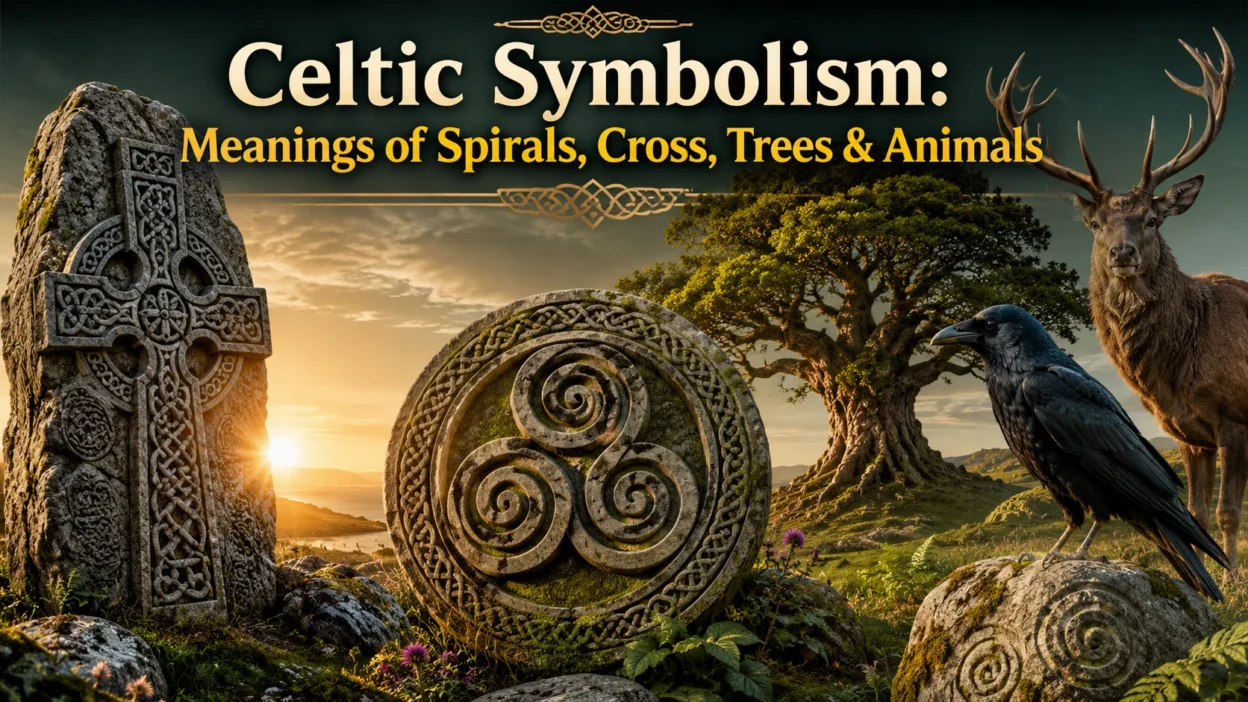
Celtic Symbolism: Meanings of Knots, Spirals, Cross, Trees & Animals explores ancient Celtic beliefs, nature, spirituality, and sacred symbols. Celtic symbolism reflects the deep connection between the Ancient Celts, their mythology, and the natural world. These powerful designs appeared in stone carvings, manuscripts, jewelry, and traditional artwork across Ireland, Scotland, Wales, Brittany, and other European regions. The symbols represented spiritual ideas, protection, ancestral wisdom, and the unseen forces believed to shape human existence.
The Celtic knots are among the most famous symbols, featuring endless loops that represent eternity, unity, and the continuous cycle of life. Their patterns often symbolize the connection between love, faith, and existence, showing that life, death, and rebirth are part of an endless journey. The Triskelion or triple spiral represents movement, growth, and spiritual awakening, reflecting balance between the mind, body, and spirit. It also connects with natural cycles and the constant flow of energy throughout life.
The Celtic cross combines ancient Celtic traditions with Christian influence, using the circular ring to symbolize the sun, eternity, and the connection between different worlds. The Celtic Tree of Life represents harmony between the sky, earth, and underworld, while sacred animals such as stags, wolves, and ravens symbolize wisdom, strength, guidance, and transformation. Together, these symbols reveal how Celtic culture viewed nature, spirituality, and ancestral heritage as deeply connected parts of existence.
Quick Answer
Celtic Symbolism represents ideas of connection, eternity, nature, strength, and spiritual balance in American culture and beyond. Its most recognized forms, including knots, spirals, crosses, trees, and animals, reflect ancient Celtic views of life’s cycles and relationships.
TL;DR
- Celtic symbols represent connection, nature, and timeless journeys.
- Knots often symbolize eternity and unbroken bonds.
- Spirals reflect growth, transformation, and life cycles.
- Celtic crosses combine cultural and spiritual meanings.
- Trees and animals represent wisdom and natural forces.
- Modern Americans use these symbols for heritage and identity.
Read more: Symbolism of a Rose: Love, Beauty, and Spiritual Meaning
What Is Celtic Symbolism?
Celtic symbols are artistic designs created by ancient Celtic-speaking communities across parts of Europe, especially Ireland, Scotland, Wales, and nearby regions. These symbols often appeared in carvings, jewelry, weapons, manuscripts, and ceremonial objects.
For many modern Americans, Celtic designs represent ancestry, creativity, and a connection with nature. However, their meanings are not always fixed because different periods and communities interpreted them differently.
Common Features of Celtic Symbols
Celtic artwork is known for flowing shapes and repeated patterns.
• Interwoven lines suggesting endless connections
• Circular forms representing cycles and wholeness
• Animal designs showing natural power
• Tree imagery linked with wisdom and life
• Spirals showing movement and transformation
Core Meanings People Associate With Celtic Symbols
Today, many people connect Celtic symbols with:
• Family bonds and ancestry
• Spiritual reflection and personal growth
• Strength through challenges
• Harmony between humans and nature
• Continuity across generations
Ancient Roots and History of Celtic Symbols
Celtic symbolism developed over many centuries rather than appearing from one single tradition. Ancient Celtic communities used artistic patterns to express beliefs about nature, society, and existence.
Before written records became common, symbols helped communicate ideas through visual storytelling. Later, Christian influences blended with earlier Celtic artistic traditions.
Pre-Christian Celtic Traditions
Ancient Celtic cultures valued natural forces and often connected landscapes with spiritual meaning. Rivers, forests, animals, and seasonal changes influenced their worldview.
The famous spiral patterns found in prehistoric European art, including sites connected with Ireland’s ancient heritage, show that circular designs existed long before medieval Celtic manuscripts.
Medieval Transformation
During the early medieval period, Celtic artwork became closely associated with illuminated manuscripts and stone crosses. Christian communities adopted and adapted many artistic styles.
This period created some of the most recognizable Celtic designs seen today, especially intricate knot patterns and Celtic crosses.
Celtic Knot Symbolism: Meaning of Endless Connections
Celtic knots are among the most recognizable Celtic designs. They feature woven lines that appear to continue forever without a clear beginning or end.
In the United States, Celtic knots are often associated with family, commitment, and lifelong relationships.
Meaning of Celtic Knots
Celtic knots commonly represent:
• Eternal connections
• Family relationships
• Loyalty and devotion
• Balance and harmony
• Spiritual journeys
Celtic Knots in Modern Life
Today, people choose Celtic knots for tattoos, wedding rings, artwork, and personal keepsakes. Many see them as reminders of relationships that continue through time.
However, historians note that specific meanings were often assigned later. Some modern interpretations are inspired by tradition rather than directly documented from ancient sources.
Celtic Spiral Symbolism and the Cycles of Life
Spirals are among the oldest symbols connected with Celtic art. Their curved movement suggests growth, energy, and continuous change.
For many people, spirals represent the idea that life moves through repeated stages rather than following a straight path.
Ancient Spiral Meanings
Spiral designs appeared in prehistoric European artwork and later became connected with Celtic artistic traditions.
They are often interpreted as symbols of:
• Personal transformation
• Natural cycles
• Inner exploration
• Movement and energy
Psychological Meaning of Spirals
Many people find spiral shapes calming because they reflect natural patterns found in shells, plants, storms, and galaxies.
Today, spirals can represent personal growth, healing journeys, or creative transformation.
Celtic Cross Symbolism: Faith, Heritage, and Identity
The Celtic cross is one of the most recognized Celtic symbols worldwide. It usually combines a traditional cross shape with a surrounding circle.
In America, the Celtic cross often appears in churches, cemeteries, jewelry, and heritage celebrations.
Historical Development of the Celtic Cross
The Celtic cross became especially visible during the medieval period in Ireland and Britain. Many examples appear as carved stone monuments.
The circle around the cross has been interpreted in several ways, including connections to eternity, unity, and the sun.
Celtic Cross Meaning in the USA
| Context | Meaning in the USA | Common Associations | Notes |
| Religious use | Christian faith | Churches and memorials | Often linked with Irish traditions |
| Family heritage | Ancestral identity | Irish-American culture | Represents cultural roots |
| Jewelry | Personal connection | Rings and necklaces | Often worn as a meaningful symbol |
| Art | Historical inspiration | Designs and decoration | Used beyond religious settings |
Celtic Tree Symbolism: Nature, Wisdom, and Growth
Trees held deep importance in Celtic traditions. The tree often represented a connection between different parts of existence.
The oak tree especially became associated with strength and endurance because of its size and long life.
The Tree as a Sacred Symbol
Celtic tree symbolism is often connected with:
• Wisdom gained over time
• Strength and protection
• Family roots
• Connection with nature
Modern Meaning of Celtic Trees
Many Americans use Celtic tree designs to express environmental awareness, ancestry, and personal growth.
Tree symbols are common in tattoos, artwork, and home decorations because they represent stability and renewal.
Celtic Animal Symbolism and Natural Power
Animals played an important role in Celtic stories and artwork. They often represented qualities humans admired or feared.
Rather than viewing animals as simple decorations, Celtic traditions often connected them with deeper ideas about survival and the natural world.
Common Celtic Animal Meanings
• Deer symbolizing gentleness and guidance
• Wolves representing loyalty and instinct
• Ravens linked with mystery and intelligence
• Horses connected with strength and movement
• Serpents associated with transformation
Animals in Modern Culture
Today, Celtic animal designs appear in tattoos, fantasy artwork, clothing, and personal symbols. People often choose animals that reflect traits they value.
Spiritual and Cross-Cultural Meanings of Celtic Symbols
Celtic symbols have influenced many spiritual and artistic communities around the world. Their meanings often overlap with universal human themes.
However, interpretations vary depending on the individual and cultural setting.
Connections Across Traditions
Similar ideas appear in many cultures:
• Spirals representing cycles of life
• Trees representing connection and wisdom
• Circles representing unity
• Animals representing human qualities
Modern Spiritual Interpretations
Some people use Celtic symbols for meditation, reflection, or personal rituals. Others appreciate them mainly for artistic beauty and cultural heritage.
Celtic Symbolism in American Culture Today
Celtic symbols became especially popular in the United States through immigration, especially among Irish and Scottish communities.
Over time, these designs expanded beyond ancestry and became part of broader American art and fashion.
Where Americans See Celtic Symbols
• St. Patrick’s Day celebrations
• Jewelry and tattoos
• Family heritage events
• Decorative artwork
• Fantasy and historical media
Celtic Heritage in the USA
Many Americans with Celtic ancestry use these symbols to explore family stories and cultural connections.
At the same time, people without Celtic ancestry may appreciate these designs for their meanings and visual appeal.
Emotional and Psychological Meaning of Celtic Symbols
Symbols often become meaningful because they help people express feelings that are difficult to explain with words.
Celtic designs frequently connect with themes of belonging, resilience, and personal identity.
Feelings Associated With Celtic Designs
People may associate these symbols with:
• A sense of connection
• Personal strength
• Memories of loved ones
• Respect for nature
• Hope during change
Identity and Self-Expression
A Celtic tattoo or necklace can represent a personal story. For some, it reflects heritage. For others, it represents values like endurance or harmony.
Modern Uses of Celtic Symbols in Tattoos, Fashion, and Decor
Celtic designs remain popular because they combine visual beauty with layered meanings.
Today, artists often adapt traditional patterns into modern styles.
Popular Modern Uses
• Tattoo designs featuring knots and animals
• Wedding jewelry with Celtic patterns
• Home artwork inspired by nature
• Decorative carvings and textiles
• Personal heritage collections
Changing Interpretations
Modern meanings often blend historical traditions with personal experiences. A symbol’s meaning may depend more on the wearer’s intention than a single official definition.
Misunderstandings, Misuse, and Controversies Around Celtic Symbols
Like many ancient symbols, Celtic designs have sometimes been misunderstood or misused.
Most uses today are connected with culture, art, ancestry, and personal meaning. However, some symbols have been adopted by groups attempting to create different meanings.
Understanding Context
A symbol’s meaning depends heavily on:
• Historical background
• Cultural setting
• User intention
• Surrounding imagery
Separating Tradition From Misuse
It is important to recognize the difference between traditional Celtic heritage and modern attempts to attach unrelated meanings to historic designs.
How Celtic Symbol Meanings Have Changed Over Time
Celtic symbols have never had only one interpretation. Their meanings have shifted as cultures, religions, and societies changed.
Ancient designs became medieval religious art and later transformed into modern expressions of identity.
From Ancient Art to Modern Identity
Today’s interpretations often combine:
• Historical appreciation
• Family heritage
• Spiritual reflection
• Artistic creativity
Revived Interest in Celtic Traditions
In recent decades, interest in Celtic symbols has grown through genealogy, fantasy literature, museums, and cultural events.
Many people now view these symbols as bridges between the past and present.
Conclusion
Celtic symbolism continues to inspire people because it connects ancient wisdom with timeless human experiences. From Celtic knots representing eternity and unity to the Tree of Life symbolizing harmony and growth, these designs express ideas about connection, transformation, and the natural world. The Celtic cross, spirals, and sacred animals such as stags, wolves, and ravens reveal how the Celts viewed life as a balance between physical existence, spiritual forces, and ancestral traditions. Today, these symbols remain meaningful in jewelry, tattoos, artwork, and personal expressions of identity, keeping the legacy of Celtic culture alive for modern generations.
FAQs
1. What does Celtic symbolism represent?
Celtic symbolism represents the connection between nature, spirituality, mythology, and human existence. These symbols often express ideas such as eternity, protection, balance, transformation, and the relationship between the physical and spiritual worlds.
2. What is the meaning of Celtic knots?
Celtic knots symbolize eternity, unity, and endless cycles because their interwoven patterns have no clear beginning or end. They are often associated with everlasting love, spiritual connection, and the continuous journey of life.
3. What does the Celtic cross symbolize?
The Celtic cross represents the blending of Celtic traditions with Christianity. Its circular ring is often interpreted as a symbol of eternity, the sun, spiritual unity, and the connection between heaven and earth.
4. What does the Celtic Tree of Life mean?
The Celtic Tree of Life symbolizes harmony, growth, and the connection between different realms of existence. Its roots represent the underworld, its trunk represents earthly life, and its branches reach toward the heavens.
5. What do Celtic animals symbolize?
Celtic animals carry spiritual meanings connected with nature and mythology. Stags often represent strength and leadership, wolves symbolize protection and loyalty, and ravens are linked with wisdom, mystery, and transformation.