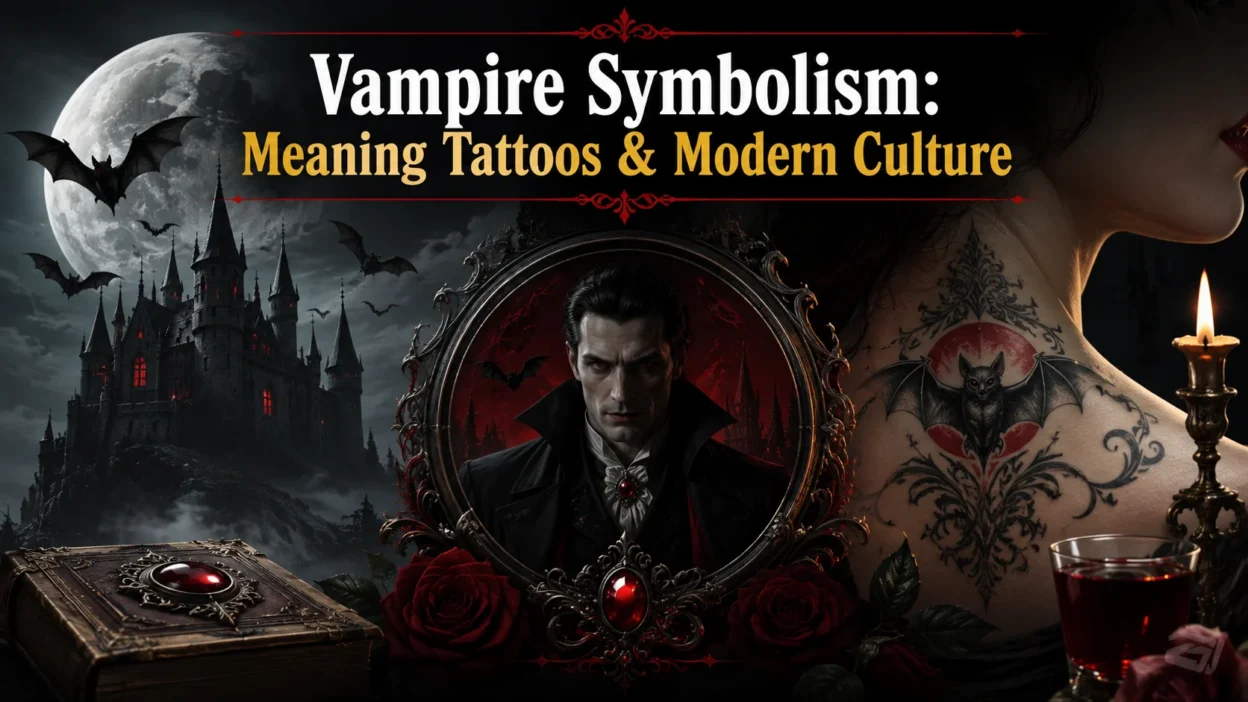
Vampire Symbolism: Meaning, Myth, Dreams, Tattoos & Modern Culture explores how these timeless figures reflect fear, desire, power, and the search for immortality. Far beyond a simple horror creature, the vampire has travelled from Eastern European folklore, Chinese legends, and Native American myths into movies, novels, and pop culture. Throughout history, this nocturnal figure has symbolised deepest fears, forbidden desires, cultural anxieties, and philosophical questions about life, death, and eternal life.
In my experience studying symbolic traditions, few images capture the human condition so completely. Vampires appear as terrifying predators and tragic romantics, embodying seduction, addiction, power, control, identity, temptation, corruption, obsession, and transformation. Their presence in literature, religion, psychology, art, and spiritual symbolism highlights their enduring role within the collective consciousness, where archetypes, mystery, fear of mortality, and existential questions continue to shape their evolving meaning.
The traditional vampire myth also relies on unforgettable physical imagery. Stories describe walking corpses, bloodsucking ghouls, and undead forms that are revived after death, rising from graves and coffins tied to native soil. Their fangs, sharp teeth, and need for human blood, essence, bodily fluids, or psychic energy symbolise the draining of one’s life force. Features such as an inability to cast a reflection or shadow, along with mirror symbolism and photographic absence, deepen the sense of supernatural horror.
In dream symbolism, vampires often represent hidden identity, emotional dependency, psychological energy drain, inner darkness, collective fears, hidden desires, manipulation, vulnerability, and the desire for transcendence. Through tattoo symbolism, artistic expression, psychological symbolism, and cultural interpretation, these figures continue to express symbolic fear, death and rebirth, supernatural transformation, gothic themes, mythological traits, and the enduring fascination humans have with what lies beyond mortality.
Quick Answer
Vampire symbolism in the USA usually points to draining energy, hidden desire, temptation, immortality, and outsider identity. It also carries older meanings tied to death, disease, and fear of the unknown.
TL;DR
• Vampires symbolize hunger, power, and forbidden desire.
• In the USA, they often reflect fear and fascination at once.
• Older roots connect to death beliefs and blood-related folklore.
• Modern uses include tattoos, Halloween, books, and social media.
• Dreams about vampires often suggest emotional drain or boundary issues.
• Meanings can shift from scary monster to stylish outsider.
Read more: Symbolism of Snake – Spiritual and Mythological Meanings
What Vampire Symbolism Means at a Glance
Vampire symbolism is built on contrast. A vampire is dead but active, feared but desired, hidden but unforgettable. That contradiction is why the image carries so much meaning in American culture.
The symbol usually blends several ideas at once. It can stand for attraction that feels risky, power that comes at a cost, or a person who takes more than they give.
Core Meanings People Commonly See
• Emotional or spiritual drain
• Seduction mixed with danger
• Immortality and resistance to death
• Outsider status and secret identity
Why the Symbol Feels So Strong
Vampires cross a line that most symbols never touch. They live between life and death, beauty and horror, control and surrender. Because of that, they work well in stories about human desire.
Where Vampire Beliefs Came From
The modern vampire did not appear all at once. It grew out of older folk beliefs, burial fears, and stories about the dead returning.
Over time, writers and filmmakers reshaped those older ideas into the elegant vampire many Americans know today. That shift matters, because the symbol changed from local folklore into a global cultural figure.
Folk Beliefs Before the Modern Vampire
Long before Dracula, many cultures told stories about dangerous dead spirits or beings that fed on life force. Some of these stories appeared in the ancient Mediterranean, while others developed in Eastern Europe and the Balkans.
People often tried to explain illness, sudden death, or odd burial conditions through these stories. In that sense, vampire lore offered a story for things that felt frightening and hard to understand.
From Folklore to Literature
The vampire became more polished in 19th-century writing. That is when it started moving from a feared corpse-like revenant into a charming, aristocratic figure.
Bram Stoker’s Dracula gave the vampire a lasting modern shape. Since then, American readers and viewers have inherited a version of the vampire that is part monster and part antihero.
Ancient and Pre-Christian Roots
Some vampire-like beliefs predate Christianity and organized folklore collections. These older stories were not always “vampires” in the modern sense, but they shared the same fear of life being stolen after death.
That background matters in the USA because many people assume vampires are only a pop-culture invention. In reality, the symbol draws from a much older human fear of the dead not staying still.
Blood, Death, and the Body
Ancient cultures often treated blood as a symbol of life itself. If blood meant life, then a creature that drinks blood becomes a symbol of life being taken away.
That idea appears again and again in vampire stories. The body becomes a site of mystery, and the grave becomes a place that may not be fully closed.
Pre-Christian Echoes
In several pre-Christian traditions, creatures or spirits were believed to return from the dead and cause harm. These figures were not identical to the vampire in modern books or films.
Still, they helped shape the larger symbolic pattern. They tied the undead to fear, impurity, and the disruption of natural order.
How Vampire Symbolism Works in the USA
In American culture, vampires are usually read through the lens of entertainment, identity, and emotional meaning. They show up in horror, romance, comedy, fashion, and self-expression.
Because the USA mixes many traditions, the vampire became a flexible symbol. It can mean predator, lover, rebel, victim, or outsider, depending on the setting.
Common American Associations
• Halloween and spooky season
• Gothic fashion and dark romance
• Power, control, and manipulation
• Secret appetites and hidden selves
American Media Shaped the Image
American film and television helped turn the vampire into a cultural icon. The vampire became stylish, sharp, and often emotionally complex.
That matters because American audiences do not only want monsters. They also want characters who reveal something about loneliness, desire, or the cost of power.
A Simple Meaning Map
| Context | Meaning in the USA | Common Associations | Notes |
| Horror stories | Fear and danger | Death, blood, predation | Classic monster use |
| Romance | Forbidden attraction | Seduction, obsession, control | Often glamorized |
| Tattoos | Identity and edge | Darkness, mystery, resilience | Style matters a lot |
| Halloween | Fun fear | Costumes, bats, fangs | Usually playful |
| Dreams | Emotional signal | Drain, anxiety, desire | Often personal, not literal |
Why Vampires Feel Both Attractive and Frightening
Vampires work because they hit two human reactions at once. People fear them, but people also look at them.
That split explains why the symbol stays popular in the USA. It gives a shape to feelings that are hard to name, like temptation, jealousy, craving, and the fear of being consumed by something.
The Pull of Forbidden Desire
A vampire often represents desire that crosses a boundary. It may be sexual, emotional, social, or psychological.
In American stories, that crossing can feel thrilling. However, it can also feel dangerous, because desire without limits often comes with loss of control.
The Fear of Being Drained
The vampire also represents exhaustion. Many people use vampire language for jobs, relationships, or habits that leave them empty.
That is one reason the symbol feels so modern. It helps describe emotional burnout in a way that is vivid and easy to understand.
What Vampire Dreams Often Suggest
Dreams about vampires are usually read symbolically, not literally. In dream language, a vampire often signals something or someone that feels draining, intrusive, or hard to escape.
For many people in the USA, the dream points to stress, boundaries, or hidden attraction. It can also reflect fear of being used.
Common Dream Themes
• Feeling emotionally drained
• Worry about manipulation
• Attraction mixed with danger
• Fear of losing personal power
Why the Dream Image Sticks
A vampire in a dream is memorable because it feels invasive. It enters space, takes energy, and blurs the line between safety and threat.
That makes it a strong image for the unconscious. Even when the dream is strange, the meaning often feels personal and immediate.
Vampire Tattoos and Body Art
Vampire tattoos are popular because they look bold and carry layered meaning. They can be dark, romantic, ironic, or rebellious.
In the USA, a vampire tattoo often says something about identity. It may hint at mystery, survival, sensuality, or a love of gothic style.
What the Tattoo Can Represent
• Embracing the shadow self
• Rebellion against neat labels
• Love of horror and gothic art
• Beauty that feels dangerous
Common Design Choices
People often choose fangs, bats, pale faces, blood drops, coffins, or gothic castles. Some designs look classic and elegant, while others lean into humor or punk style.
The design style changes the message. A playful cartoon vampire feels very different from a realistic, haunting portrait.
Vampire Symbolism in Movies, TV, and Books
American culture has made the vampire into a mirror. Each new era gives the vampire a fresh meaning.
Sometimes vampires represent old-world aristocracy. Other times they stand for teenage longing, hidden sexuality, addiction, or social alienation.
From Monster to Antihero
Older vampire stories usually treated the vampire as a threat. Modern stories often make the vampire sympathetic, attractive, or misunderstood.
That shift changed the symbol. The vampire became a way to explore what it feels like to be outside the group, or to want things society says are forbidden.
Why Pop Culture Keeps Reusing the Vampire
The vampire is flexible. Writers can use it for fear, romance, comedy, tragedy, or social critique.
Because it can hold so many meanings, the vampire keeps returning in American books, shows, and films. It never stays in one form for long.
Vampire Symbolism in Halloween and Seasonal Decor
Halloween is one of the biggest places Americans see vampire imagery. The symbol becomes playful, bright, and easy to recognize.
That does not erase the darker meaning. Instead, it turns fear into a seasonal game, which is part of Halloween’s appeal.
Why It Fits the Holiday
Halloween already mixes death, disguise, and mischief. Vampires fit that mix perfectly.
They also offer a strong visual identity. Fangs, capes, red accents, and pale makeup are easy to spot from across a room.
How Americans Use It Now
• Costumes for parties and school events
• Table decor with a gothic look
• Social media posts with dark aesthetics
• Seasonal branding and themed products
Cross-Cultural and Spiritual Meanings
Outside the USA, vampire-like figures appear in many traditions. The details change, but the core pattern often stays similar: a being that takes life, energy, or vitality.
This is a broad symbolic pattern, not a single universal belief. It is best to treat each tradition on its own terms.
Shared Themes Across Cultures
• Fear of death or restless spirits
• Concern about blood, purity, or ritual order
• The danger of hidden predation
• The boundary between body and soul
Spiritual Readings in Modern Practice
Some modern spiritual readers treat vampire symbolism as a sign of energetic boundaries. In that frame, the vampire is less a monster and more a warning.
Others see it as a shadow symbol. It can point to parts of the self that hunger, hide, or try to survive by taking from others.
Misunderstandings, Controversies, and Harmful Uses
Not every vampire image is harmless fun. The symbol has sometimes been tied to harmful stereotypes, fear of outsiders, or exploitative behavior.
A careful reading matters here. The vampire itself is not the problem, but the way people use it can be.
Common Misunderstandings
Some people treat every vampire image as pure evil. Others assume it always means sex or romance.
In reality, the symbol can mean many things at once. Context decides whether it feels playful, tragic, seductive, or threatening.
When the Symbol Turns Harmful
Vampire language can be used to dehumanize people or groups. It can also be used to romanticize manipulation, abuse, or unhealthy control.
That is why tone matters. A symbol about taking life should not be used to excuse taking from real people.
How Vampire Symbolism Has Changed Over Time
The vampire’s meaning has moved from fear of the dead to fascination with the self. That is a big shift, and it reflects changing culture in the USA and beyond.
Today, the vampire is often less about a graveyard and more about identity. It can express loneliness, strength, rebellion, or the feeling of living on the edge.
What Used to Matter Most
Older vampire stories focused on death, corruption, and bodily danger. The monster was usually a warning, not a fantasy.
What Matters Now
Modern Americans often read vampires through emotion and style. They can signal goth aesthetics, queer subtext, power imbalance, or the temptation to become something other than ordinary.
Conclusion
Vampire Symbolism: Meaning, Myth, Dreams, Tattoos & Modern Culture reveals that vampires are far more than fictional monsters. Across mythology, folklore, literature, and modern culture, they have served as powerful symbols of humanity’s deepest fears and strongest desires. They reflect our concerns about death, immortality, temptation, identity, power, and the emotional struggles that shape the human condition.
Whether appearing as terrifying predators or tragic figures seeking connection, vampires continue to evolve with society. Their presence in dreams, tattoos, art, and popular media shows how their symbolic meaning adapts to each generation while preserving ancient themes of transformation, mystery, and transcendence. Understanding vampire symbolism offers insight not only into cultural history but also into the hidden aspects of human psychology and spirituality.
FAQS
1. What does a vampire symbolize spiritually?
Spiritually, vampires often symbolize energy drain, temptation, hidden desires, and the struggle between light and darkness. They may also represent transformation, rebirth, and the search for deeper meaning.
2. What do vampires mean in dreams?
In dreams, vampires can point to emotional dependency, fear of betrayal, loss of personal energy, or unresolved fears. Sometimes they symbolize unhealthy relationships or aspects of oneself that need attention.
3. Why are vampires associated with immortality?
Vampires are linked with immortality because they exist between life and death. This symbolic state reflects humanity’s long-standing fascination with eternal life and the fear of mortality.
4. What do vampire tattoos symbolize?
Vampire tattoos can represent mystery, seduction, resilience, transformation, rebellion against social norms, or an appreciation for gothic aesthetics and supernatural themes.
5. Why are vampires still popular in modern culture?
Vampires remain relevant because they adapt to changing cultural values. Modern stories use them to explore topics such as identity, power dynamics, emotional complexity, morality, and the timeless human desire to overcome death.